
CD Releases Catalog
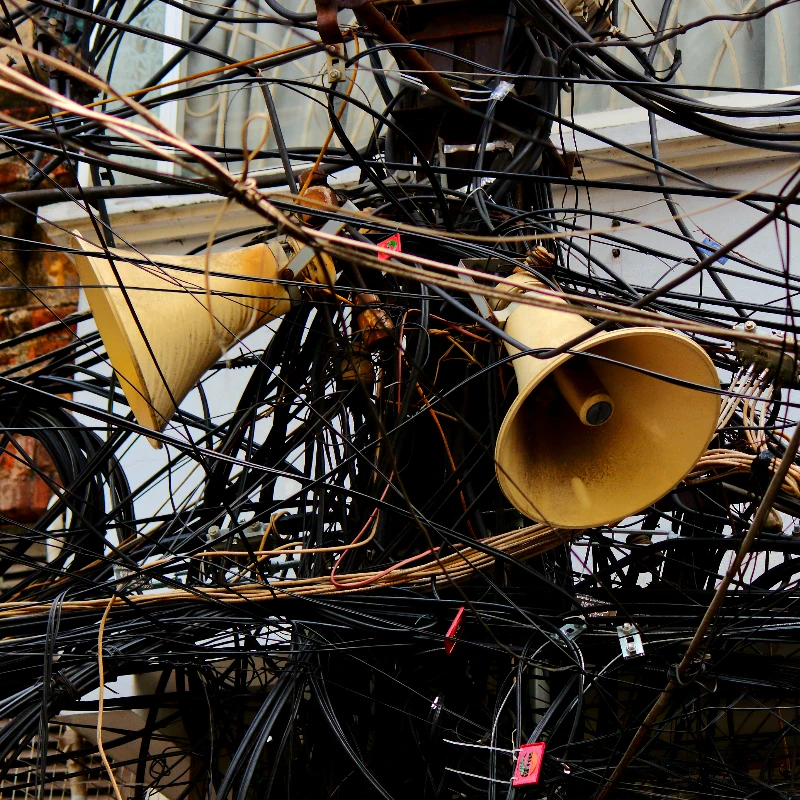
Welcome to the Saamleng website
Hello everyone. In a world dominated by corporate social media, we’ve decided to create a small place of our own. Here you’ll find our entire catalogue – information and links to all our CDs, digital albums and videos – and, from time to time, content not available anywhere else. We hope this is just the beginning and that the site will keep growing. Enjoy your visit.

saamleng01
Khmer & Siam Recordings
Mirt
The album collects recordings from Mirt’s first visit to Thailand and Cambodia in 2013 that inspired the creation of the Saamleng label. It documents an encounter with foreign soundscapes where anthropophony intertwines with natural sounds in a completely different way than what the ear of a European resident is accustomed to. Despite being barely a postcard – half-diary, half-journey in itself in retrospect – the album’s strength lies in its attention to details that become too familiar as we get to know foreign places better and start to ignore them.
01.Rain, Bells and Cicadas
02.Cicadas and Frogs 1
03.Cicadas and Frogs 2
04.Band in Preah Khan
05.Temple Ambient
06.Nest of Insects
07.Cicadas and Birds
08.Khmer Radio
09.Hobo Song
10.Riots and the Muezzin
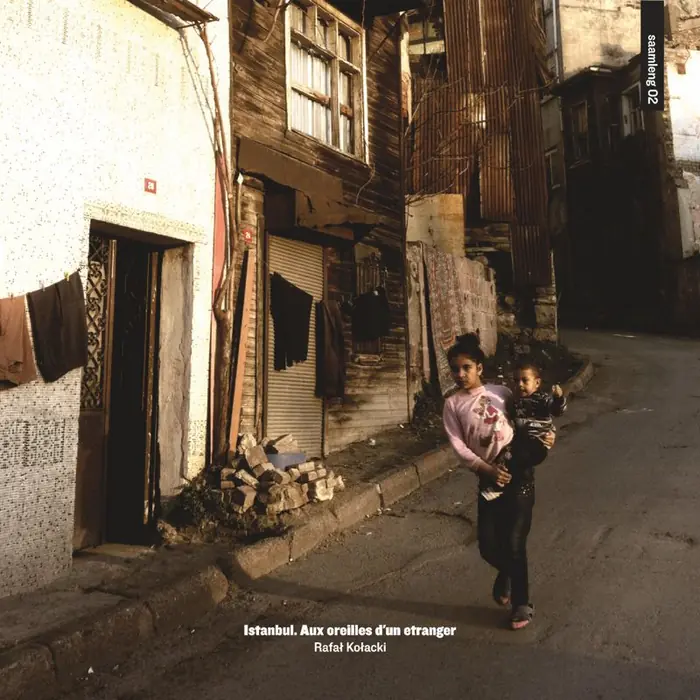
saamleng02
Istanbul. Aux Oreilles D’un Etranger
Rafał Kołacki
Rafał Kołacki, an archaeologist, ethnologist, and cultural activist studying the anthropology of sound and urban soundscapes, documents his visit to Istanbul. The album consists of one long recording presenting a collage of street sounds, work noises, prayers, and local music, capturing the layered sonic fabric of this city straddling two continents. It presents the acoustic atmosphere of Istanbul through the ears of a stranger, where the familiar and the foreign constantly overlap, and where the call to prayer mingles with the rumble of traffic and the voices of street vendors.
01.La Ceremonie A Fini Par Quelques Miracles...
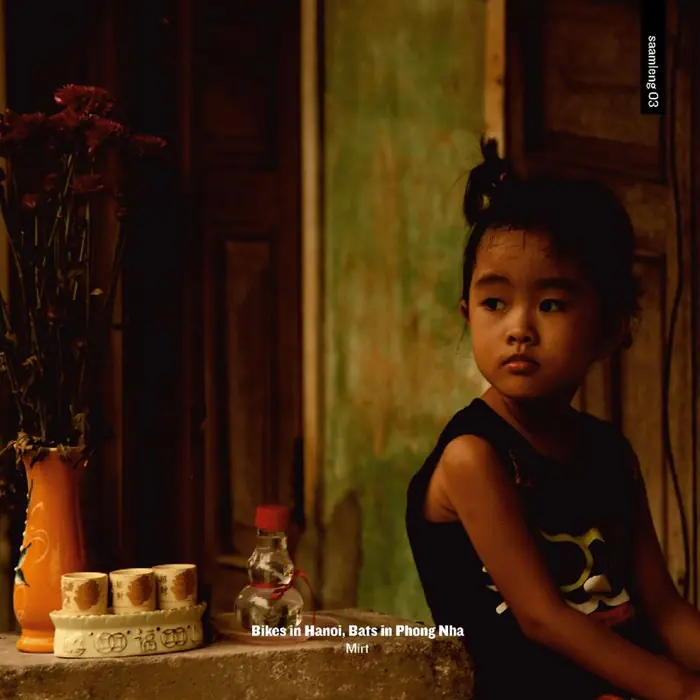
saamleng03
Bikes in Hanoi, Bats in Phong Nha
Mirt
The album juxtaposes two contrasting soundscapes recorded in Vietnam: the sounds of bustling streets in Hanoi and the biophony of one of the world’s largest caves near Phong Nha and its surroundings. Despite their differences, both parts capture incredibly intense sonic environments. The album questions Raymond Murray Schafer’s division into hi-fi and lo-fi soundscapes, especially in the context of encounters with foreign environments and cultures, where the distinction between unwanted noise and interesting soundmarks or keynote sounds can be ambiguous, particularly for a stranger.
01.Bikes in Hanoi
02.Bats in Phong Nha
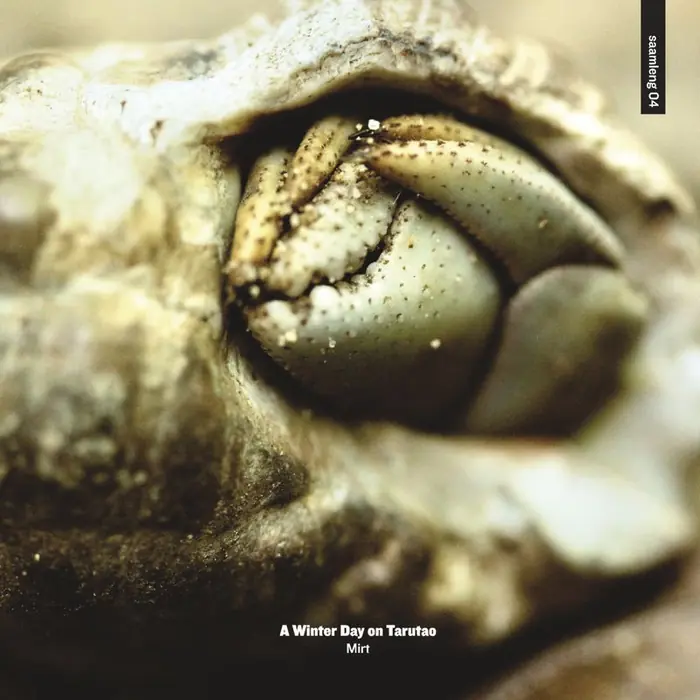
saamleng04
A Winter Day on Tarutao
Mirt
The first album in a series documenting the soundscape of Tarutao Marine National Park in Thailand, one of the country’s most exquisite and unspoilt regions. The park is covered with well-preserved virgin rainforest teeming with fauna including dusky langurs, crab-eating macaques, hornbills, sea eagles, and over 110 species of birds. The album presents what is likely a typical winter day on this wild island, focusing on the sounds of nature in an environment where human presence is minimal. Consisting of three main sections depicting morning, afternoon and evening, interspersed with hydrophone underwater recordings, the album makes no claim to comprehensively represent the island but rather documents the author’s initial encounter – a single winter day among the few experienced during this first visit to Tarutao.
01.Morning
02.Bay Water
03.Afternoon
04.Oxbow Water
05.Evening
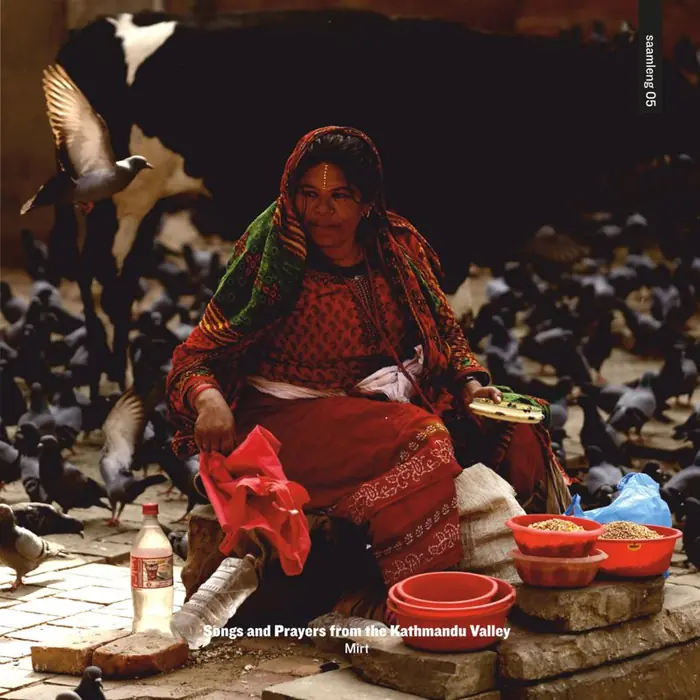
saamleng05
Songs and Prayers from the Kathmandu Valley
Mirt
A collection of recordings made in Nepal, in Kathmandu, Bhaktapur, Nagarkot, and Pokhara. The album explores the fluid boundary between environmental sounds and musicality, where the rhythmic turning of prayer wheels and distant wedding celebrations reverberating through city streets reveal an inherent sonic poetry. Everyday sounds – water flowing, spinning wheels crafting yarn – take on melodic qualities when heard with attentive ears. Moving between backstreet scenes and temple rituals, the recordings document how the sacred and mundane coexist in the Kathmandu Valley’s soundscape, creating a natural composition where prayers, labour, and celebration form an inseparable sonic fabric of daily life.
01.Party Music I
02.Backstreet in Bhaktapur
03.Party Music II
04.Prayer Wheels in Boudhanath
05.Prayers in Swayambhunath
06.Boudhanath Ambient
07.Distant Music from Kathmandu
08.Changu Narayan Ambient
09.Birds from Nagarkot
10.Boat Ride in Pokhara
11.Prayers in Shanti Stupa
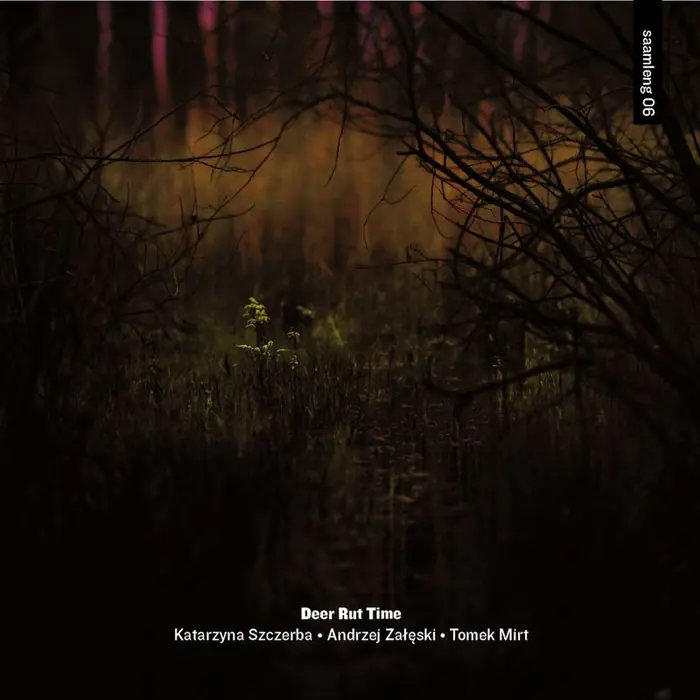
saamleng06
Deer Rut Time
Katarzyna Szczerba • Andrzej Załęski • Tomek Mirt
A compilation of deer rut recordings made by three Polish artists in different locations across Poland. Katarzyna Szczerba, a sound recordist working in film production and winner of multiple international awards, captured the evening sounds near Osiek by the Noteć River. Andrzej Załęski, musician, filmmaker, and music curator, recorded both night and daytime sessions in the primeval Białowieża Forest. Tomek Mirt contributed nocturnal recordings from the Odra River floodplains near Siekierki. The album documents this seasonal natural phenomenon from multiple perspectives and environments, capturing the haunting calls of rutting deer across Poland’s diverse landscapes.
01.Osiek nad Notecią: The Evening
recorded by Katarzyna Szczerba
02.Białowieża Forest: The Night
03.Białowieża Forest: The Daytime 1
04.Białowieża Forest: The Daytime 2
recorded by Andrzej Załęski
05.Odra Backwater: The Night
recorded by Tomek Mirt
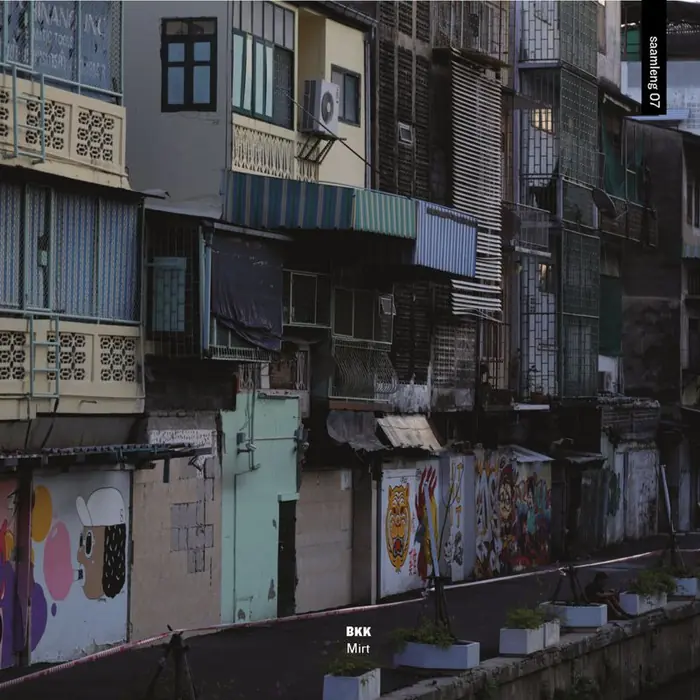
saamleng07
BKK
Mirt
A sonic portrait of Bangkok created after several visits to the city, presenting 18 short recordings trying to avoid unnecessary aestheticisation in favour of seeking valuable qualities in ordinary sounds. Moving through parks, markets, temples, and street scenes, the album refuses to function as either an objective guide or a postcard displaying only picturesque moments. Much of the album focuses on the extraordinary intensity and complexity of the city’s sounds that at their most extreme resemble plunderphonic collages. The result ranges from Muay Thai training, karaoke sessions and evening workouts to street vendors, air conditioners, and temple ambiences, creating an authentic portrait of bustling Bangkok’s sonic fabric.
01.Park
02.Crossing
03.Radio 1
04.Food
05.Chimes
06.Karaoke
07.Market 1
08.Hammers
09.Radio 2
10.Fridge
11.Market 2
12.Street 1
13.Workout
14.Muay Thai
15.Market 3
16.Wat Saket
17.Air-Con
18.Street 2
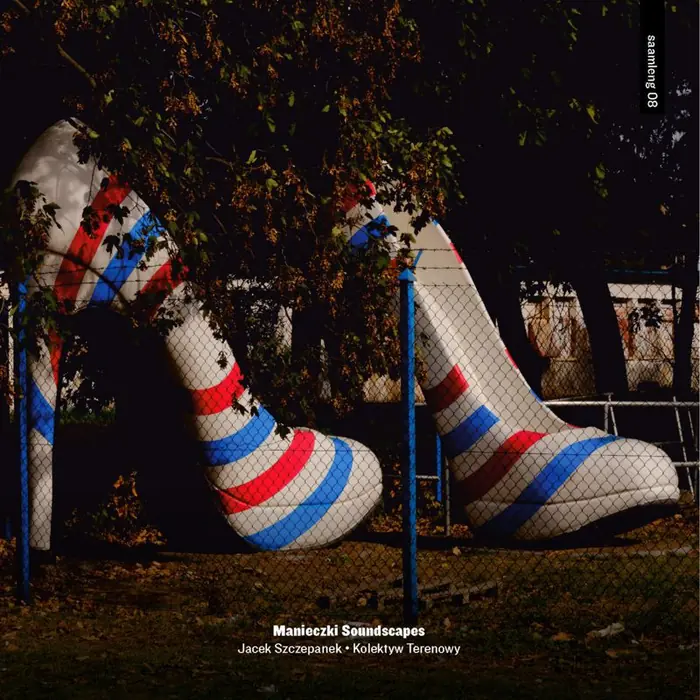
saamleng08
Manieczki Soundscapes
Jacek Szczepanek • Kolektyw Terenowy
Jacek Szczepanek, a professional field recordist, ventures into the unusual acoustic territory surrounding one of Poland’s legendary provincial discos. Recorded in the early morning hours between 2:00 and 6:00 AM at varying distances of 50–800 metres from Klub Ekwador, the album captures the peak activity of nocturnal birds – particularly Nightingales and Great Reed Warblers – occurring precisely when the party reaches its climax. In this village of just 600 inhabitants, located 10 kilometres from the nearest town, nature’s chorus and human revelry create an unintentional sonic dialogue. The recording documents this peculiar collision of biophony and anthropophony, where the ancient rituals of mating calls interweave with the bass-heavy pulse of contemporary nightlife.
01.Night Soundscape
02.Dawn Bass
03.Morning Polyrhythm
saamleng09
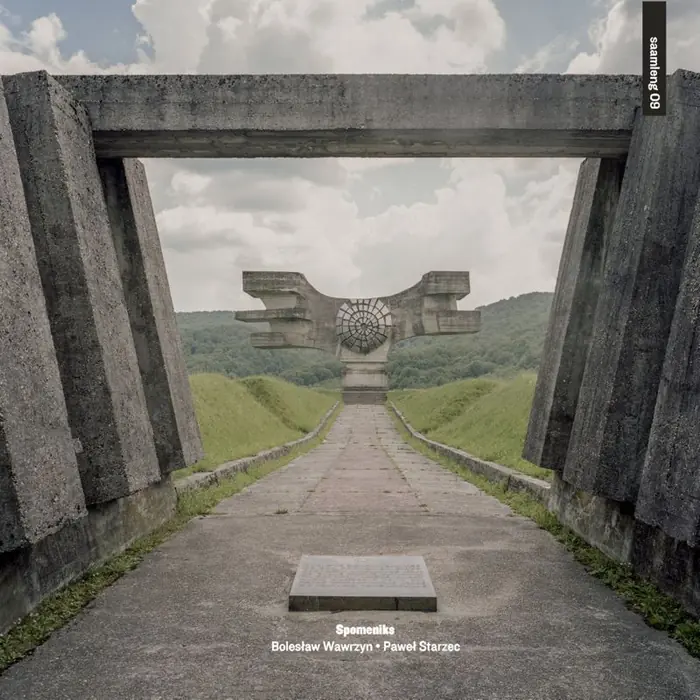
Spomeniks
Bolesław Wawrzyn • Paweł Starzec
Bolesław Wawrzyn (a field recording project by Michał Turowski) usually records execution sites and extermination camps in Poland; this time he turned to camps in the former Yugoslavia. The album documents concentration camps including Jasenovac (often referred to as “The Yugoslavian Auschwitz”), Jajinci, Sajmiste, and Topovske Supe, as well as the Monument to the Revolution of the People of Moslavina in Podgarić – one of the striking brutalist sculptures commissioned by Tito in the 1960s and 70s to commemorate WWII. Paweł Starzec, a photographer whose images grace the album’s cover, accompanied the sonic documentation with visual testimony. Together, they capture the current reality of these memorial sites where mass atrocities occurred during WWII – places that today often stand neglected or forgotten, their symbolism lost in the aftermath of Yugoslavia’s dissolution, yet still resonating with the weight of history.
01.Jasenovac Concentration Camp
02.Memorial Park Jajinci
03.Sajmiste Concentration Camp
04.The Topovske Supe Concentration Camp
05.Monument to the Revolution of the People of Moslavina

saamleng10
Tristes Tropiques
Mirt
Recorded in Vietnam, the album uses environmental recordings to depict a kind of internal spiritual journey, creating an imaginary soundscape not through edits or collage but by arranging and combining recordings from real places. Reality and actually visited locations merge with personal fleeting impressions and experiences, giving the whole a surreal character. The recordings often focus on unusual or unwanted acoustic phenomena such as exceptional reverberations, glitches, distortions, sometimes a layering of natural and artificial sounds in space, or those simply foreign to a traveller from another culture.
01.Fading
02.Abandoned Concrete
03.Spatial I
04.Granular
05.Fading (Continuation)
06.Saturation
07.Hotel Room Drone
08.Steady Pulse
09.Saturation (Continuation)
10.Spatial (Different One)
11.Crescendo
12.Spatial II
13.Happy End?
saamleng11
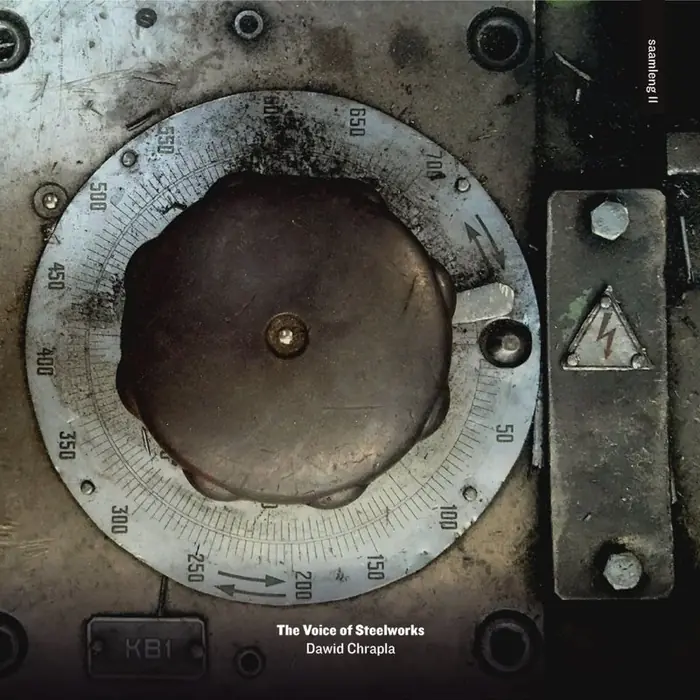
The Voice of Steelworks
Dawid Chrapla
Dawid Chrapla’s album captures the sonic character of a steelworks in Zawadzkie, a town in southern Poland where the artist lives. The recordings present the acoustic environment of heavy industry with meticulous attention to detail and sonic quality, revealing the complex textures of industrial labour – the roar of furnaces, the rhythmic clanging of machinery, and the ambient hum of production. Rather than approaching the subject as an outsider, Chrapla documents a landscape that he knows well and which is significant for him also in a musical context. He transforms the distinctive voice of steel production into a portrait both industrial and intimate.
01.Forge I
02.Forge II
03.Tool and Die Hall
04.Drawing Mill
05.Rolling Mill
06.Pipe Mill
07.Pin Forging Hall
saamleng12
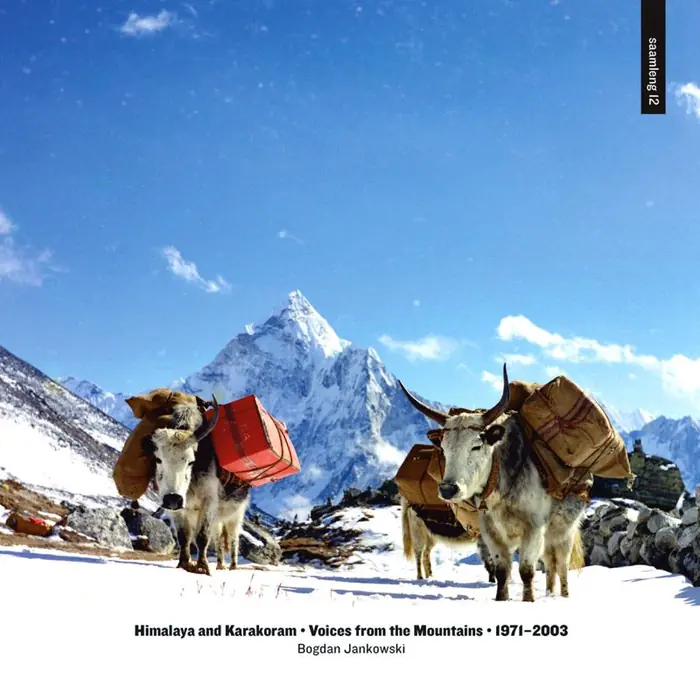
Himalaya and Karakoram • Voices from the Mountains • 1971–2003
Bogdan Jankowski
Bogdan Jankowski (1938–2019) took part in many Polish historical mountaineering expeditions led by Andrzej Zawada. Initially, he participated in them primarily as a climber, but on subsequent expeditions he was more and more responsible for radio communication. He brought countless photos and sound recordings back. Each trip resulted in several dozen hours of such recordings, most of which documented the course of the trip. They consist of radio communication, as well as occasional speeches. However, in his spare time between expedition duties, Jankowski turned his ear to the space surrounding him – the sonic reality of the mountains, their inhabitants and their daily habits. This part of the archive consists of field recordings of local music, prayers and sounds of the surroundings. “Himalaya and Karakoram. Voices from the Mountains” is a selection of Bogdan Jankowski’s most interesting recordings, from the first expedition to Kunyang Chhish in 1971 to the last expedition he participated in, K2 in 2002/2003. However, the recordings are not presented in chronological order here, but rather in line with the natural course of each trip – a caravan leading from the lowlands through increasingly sparse villages and herding sheds to the base camp, ice climbing, attempts to reach the summit and finally return to the valleys, to civilisation. They are not only an extraordinary testimony of Polish Himalayan climbing culture, but they also establish the foundations for field recordings in Poland.
01.Buddhist Monastery Gong
02.Buddhist Prayers
03.Morning Prayers
04.Water Prayer Wheels I
05.Puja Before Departure
06.Water Prayer Wheels II
07.Muezzin in Skardu
08.Ensemble of the Mir of Nagar
09.Camels in the Caravan
10.Caravan Moves On
11.Radio I
12.Radio II
13.Wind Howling Outside a Tent
14.Radio III
15.Crampons and Ice Axe
16.Radio IV
17.Camp under K2
18.Breaths
19.Report From the Top of Everest
20.Evening Camp
21.Drumming
22.Singing and Dancing Sherpas
23.Caravan
24.New Year Concert
saamleng13
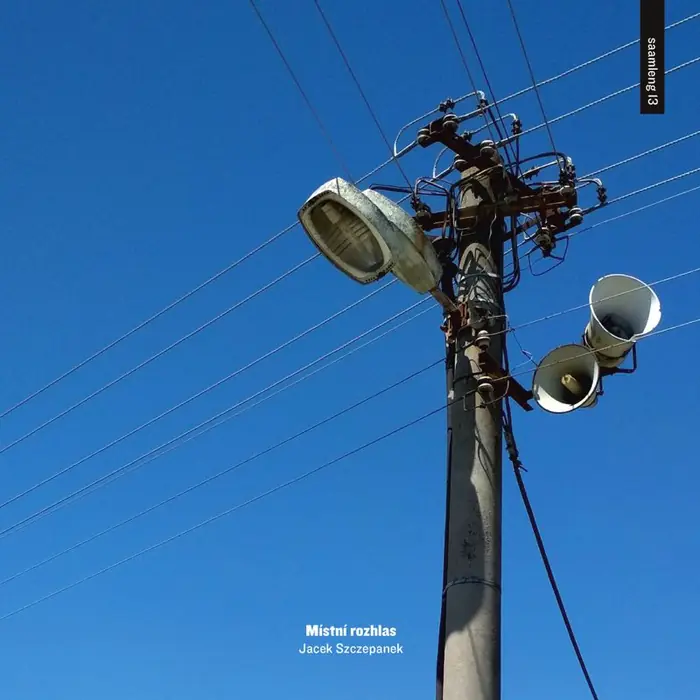
Místní rozhlas
Jacek Szczepanek
Jacek Szczepanek documents the phenomenon of local public address systems (místní rozhlas) widespread across Czech and Slovak villages and small towns. These systems are a characteristic element of the environment, often with sounds from multiple speakers overlapping each other. The album captures announcements, music, and messages broadcast through community speaker systems, reflecting a distinctive and somewhat surreal aspect of the visited places.
01.Košťálov I
02.Slatiny
03.Radimovice
04.Třebechovice pod Orebem I
05.Lomnice nad Popelkou
06.Třebechovice pod Orebem II
07.Košťálov II

saamleng14
Another Day on Tarutao
Mirt
The second album from Tarutao Marine National Park in Thailand takes a different approach from its predecessor. Rather than following a unified concept, it functions more as a notebook – gathering the most compelling recordings from subsequent visits without the self-imposed structure of the first album. Mirt, now more conscious of his deeper relationship with the place and his desire to return, treats the project in a more relaxed way as an ongoing work in progress. The recordings present the island’s sonic environment through snippets gathered during different times of day in a more chaotic manner but with greater depth and familiarity.
01.Morning in the Swamp
02.Misunderstanding
03.Pigeons
04.Oriole
05.Macaques I
06.Just Birds
07.Just Cicadas
08.Birds and Cicadas
09.Gecko in the Wild
10.A Tall Tree
11.Macaques II
12.Brook
13.Mosquitoes
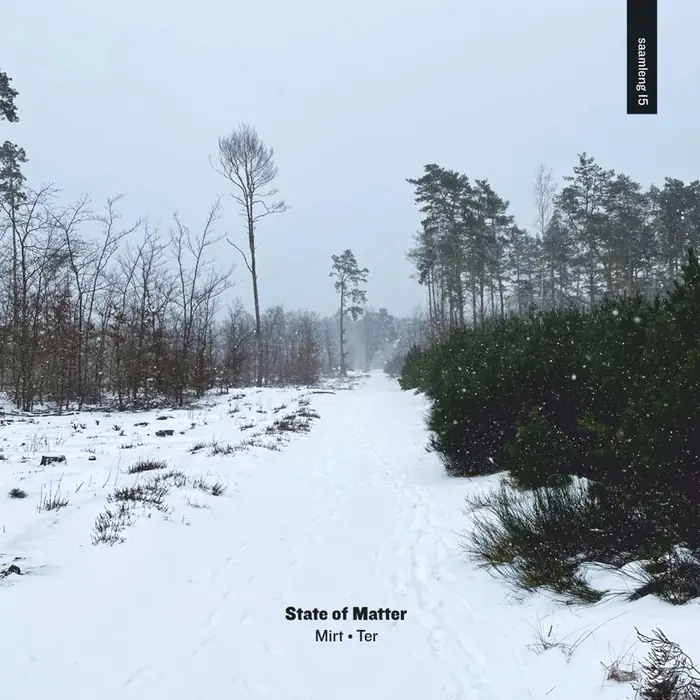
saamleng15
State of Matter
Mirt • Ter
A collection of winter soundscapes recorded in the vicinity of Warsaw during the pandemic, a period that compelled the authors to focus on their immediate surroundings with heightened attention. Spending their first winter at home in several years, they turned their ears to the smallest sonic details characteristic of the season, discovering a desire for deeper exploration of familiar territory. The album focuses on sounds of snow, ice, and floes – the crackle of frozen surfaces, the subtle movements of ice formations, the muffled acoustics of snow-covered landscapes. These recordings are driven by reflections on climate change and the fear that these may be among the last opportunities to capture such phenomena in these locations, as winters grow milder and less predictable.
01.Snow and Trains 1
02.Floe on the Vistula River
03.Vibrating Reed
04.Floe on the Pilica River
05.Snow and Trains 2
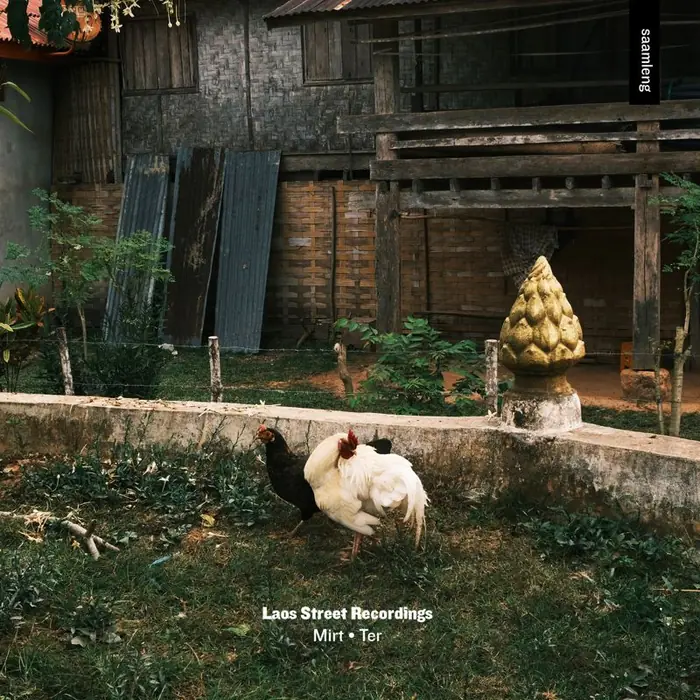
saamleng16
Laos Street Recordings
Mirt • Ter
The album collects recordings made in a spontaneous, observational style, capturing seemingly mundane moments across Laos – from larger cities like Luang Prabang and Vientiane to the village of Nong Khiaw. Rather than attempting to tell a cohesive, easily decipherable story, this is a collection of images, quick sketches caught on the fly: advertising loudspeakers, prayers, abandoned amusement park grounds, sounds from local eateries, the resonance of bridges and walkways. Many recordings capture a more provincial, rural character. It’s a travelogue focusing on contemplation of everyday life.
01.Street Musician
02.Morning at Amusement Park
03.Speaker on the Street
04.Prayers
05.Food Stall in the Backstreet
06.Old French Bridge
07.Birds at the Crossroad
08.4 a.m. Vat Mouanna Somphowaram
09.Brook
10.Birds in the Bushes
11.Cattle
12.Bamboo Bridge
13.Pétanque
14.Echo in the Mountains
15.Night
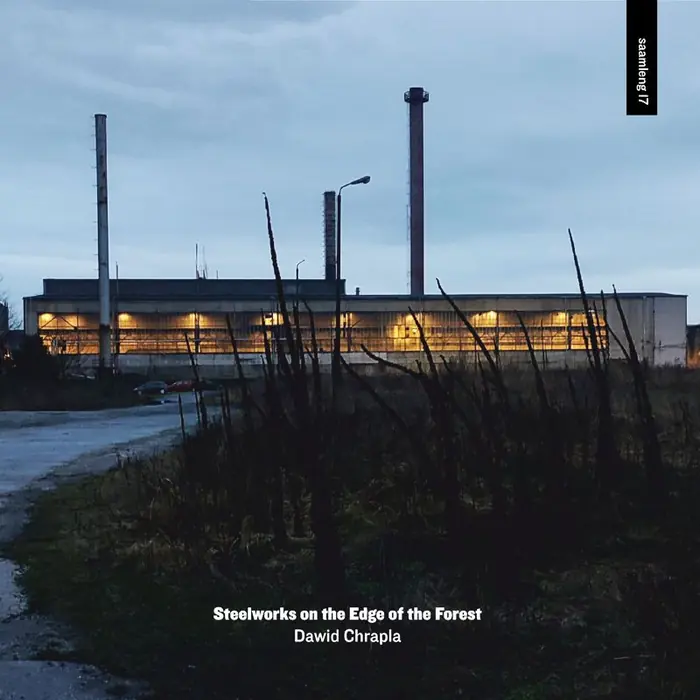
saamleng17
Steelworks on the Edge of the Forest
Dawid Chrapla
Dawid Chrapla returns with his second album collecting recordings whose main topic is steelworks. This time, the industrial sounds were recorded from a distance and were accompanied by various voices of nature. The echoing low growls and thumps of the steelworks are sometimes almost drowned out by the chorus of frogs. Other times, they dominate over the almost inaudible sounds of nature. It’s an intriguing and addictive mix of contrasting elements.
01.Steelworks in the Wood
02.Cold Spring Day
03.The Rolling Mill and the Birds
04.Forge on the Edge of the Forest 1
05.Frogs and the Forge
06.Crickets and the Forge
07.Forge on the Edge of the Forest 2
08.The Rolling Mill
09.Work Break
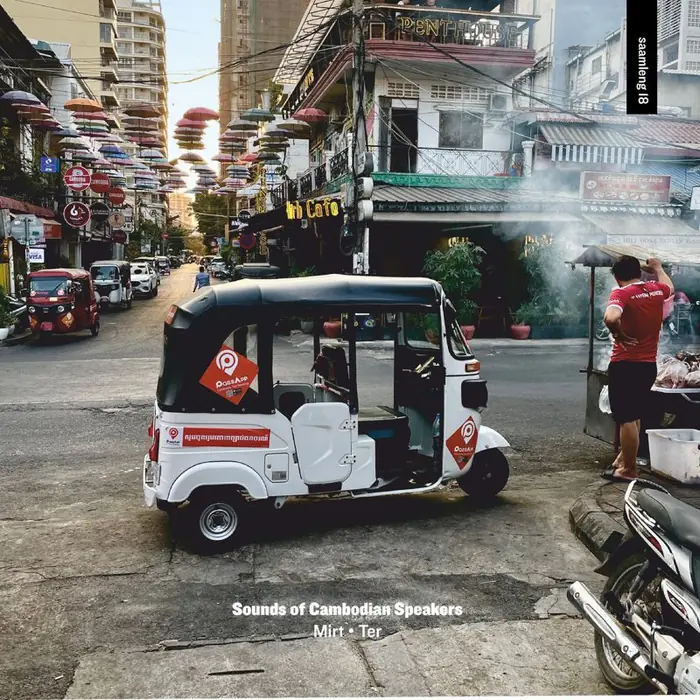
saamleng18
Sounds of Cambodian Speakers
Mirt • Ter
Whether it’s the distant echoes of local wedding sound systems or the screeching advertisements coming from mobile scooter-powered stalls, the Southeast Asian landscape is filled with the voices of myriads of loudspeakers. This collection compiles only recordings from around Battambang and Phnom Penh in Cambodia, but in many ways is universal for the entire region. The countryside, the temples and the city streets are full of these artificial sounds generated by mobile phones, PA systems or even simple beepers. Sometimes it just adds a unique flavour to the place, as when you hear the soft sounds of local music among vast rice fields, other times it is surreal, even slightly disturbing, as in the case of bird recordings played near the silos to scare away other avians.
01.Street Vendor I
02.Street Vendor II
03.Street Vendor III
04.Prayers in Aek Phnum
05.Street Vendor IV
06.Ice Cream Truck
07.Inside Wat Phnom Daun Penh
08.Street Vendor V
09.Countryside PA System
10.Inside 7 Eleven
11.Street Vendor VI
12.Fake Birds
13.Street Vendor VII
14.Music in Aek Phnum
15.Street Vendor VIII
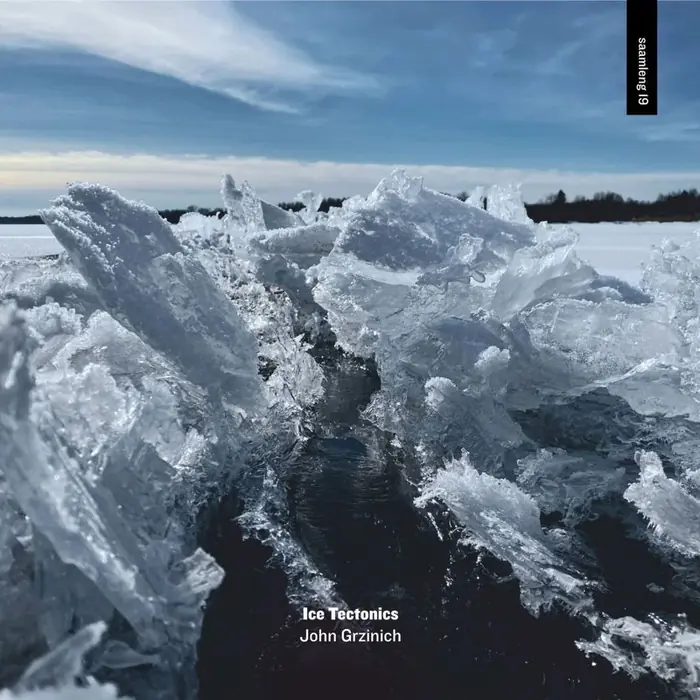
saamleng19
Ice Tectonics
John Grzinich
Since moving to Estonia 20 years ago, I’ve become fascinated by ice. After walking on the frozen Baltic Sea and hearing loud “voices” from a local lake one still and cold night, these experiences have transformed the way I think about frozen bodies of water. Far from solid static entities, these great frozen planes are alive and behave in ways not unlike the crust of the earth. From subtle shifts to violent eruptions the tectonic-like movements of ice can become dynamic and dramatic sonic events. In the spring of 2024 I, or we, got lucky. It had been a good winter (by climate change standards), but a sudden warm spell melted the snow and eased up the rigid tension of the frozen lakes. The outcome of my explorations has resulted in “Ice Tectonics”, a collection of select recordings that reveals what a seasonal transition means for ice and the varied sounds that emerge.
01.Long Night, Laho Forest Lake
02.Large Fissure, Lake Peipsi
03.Another Long Night, Laho Forest Lake
04.Converging Cracks, Lake Peipsi
05.Unstable Edge, Lake Peipsi
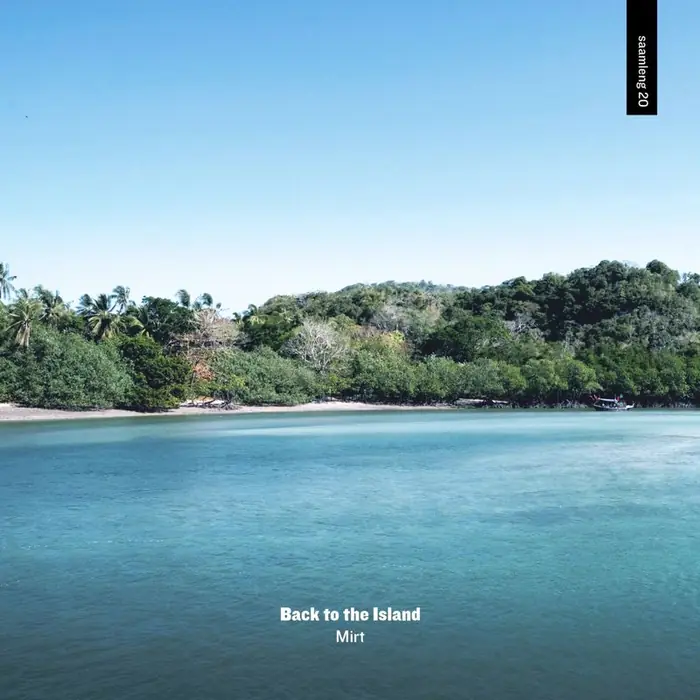
saamleng20
Back to the Island
Mirt
The third CD album in the Tarutao series documents the current state of a decade-long process of deepening engagement with the island’s soundscape. What began in 2016 as a cautious observation of a single winter day evolved into repeated returns, each visit peeling back another layer of understanding. The recording method itself evolved with each walk along the island’s roads, with much credit to overnight drop rigs capturing the environment without human presence, revealing how profoundly the soundscape changes when the observer becomes absent. Over time, the initial excitement of novelty gave way to recognition of patterns and perceiving the environment more as a holistic organism than just a set of events.
01.On the Way to Ao Talo Wao
02.Cicadas Ensemble
03.In the Treetops I
04.Over the Brook
05.In the Treetops II
06.Macaques Fight
07.Dusky Langurs at Night
08.Early Morning
09.Morning Call
10.Tree Against Tree
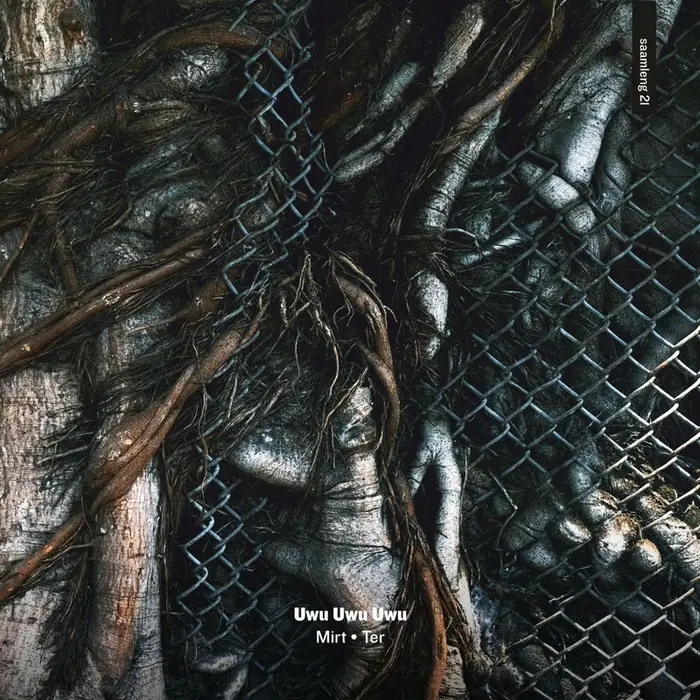
saamleng21
Uwu Uwu Uwu
Mirt • Ter
If I had to point out one distinctive element of the Southeast Asian soundscape, it would be the call of the Asian Koel – a close relative of the cuckoo. It is likely that most visitors to India, Thailand, Laos or Cambodia have heard its unique call at least a few times. It is different from, but just as distinctive as, the cuckoo’s call. This bird can be heard as easily in remote rural areas as it is in bustling cities like Chiang Mai or Bangkok. Even with all the noise of traffic, you can hear a Koel singing a few blocks away. It is no wonder that this bird is considered the noisiest in Asia. This album is a tribute to this indomitable red-eyed singer. Recorded in different locations in Northern Thailand.
01.Early Morning in the Village
02.Countryside Evening
03.Backstreet Talks
04.Rush Hours I
05.Rush Hours II
06.Myna Flock in the Evening I
07.City Before Noon
08.Ordinary Life I
09.Ordinary Life II
10.Festival
11.Rush Hours III
12.Myna Flock in the Evening II
13.Lost In Translation
14.Old Railway Bridge
15.Wat Sannameng
16.Night in the Village
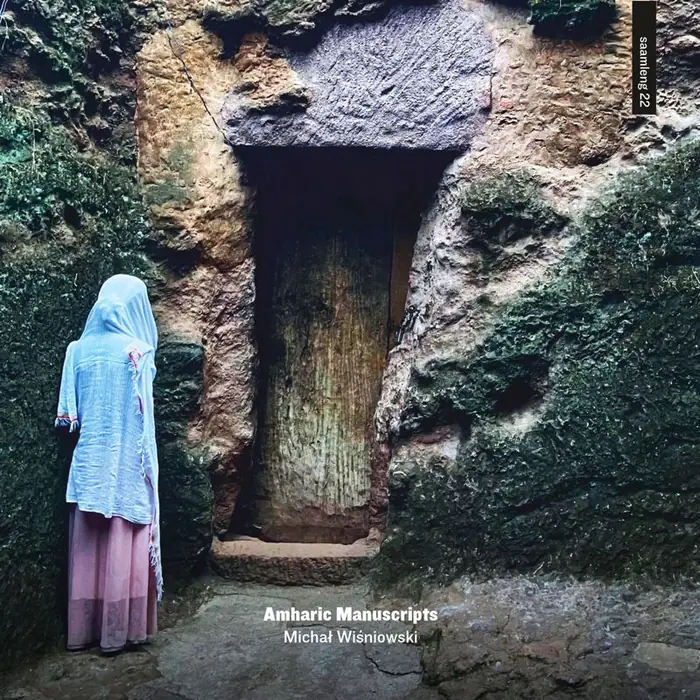
saamleng22
Amharic Manuscripts
Michał Wiśniowski
Michał Wiśniowski’s “Amharic Manuscripts” is a sonic journey through the heart of Ethiopia – from the monumental waterfalls of the Blue Nile, through the streets of Addis Ababa, to the silence of the rock-hewn temples of Lalibela. Field recording interweaves with stories of everyday life, spirituality, and rituals, where the sacred and the profane intertwine. The richness of the soundscapes captures both the majesty of nature and the intimacy of human gestures – from fieldwork to prayer. This album not only documents but also meditates on the harmony of man, God, and nature.
01.Tis Ysat
02.Light and Shadow
03.Joy I
04.Joy II
05.At Work
06.Unity
07.Echoes I
08.Ritual
09.Echoes II
10.Tana

saamleng23
Mangrove Forest Tides
Mirt • Ter
Looking at a map of Tarutao, it becomes clear how small a portion of the island we actually explored. Countless times we travelled the road from Ao Pante Malca to Ao Talo Wao, where it eventually dissolves into dense forest, but this stretch covers barely a third of the island’s length. I have little doubt that what we recorded previously reflects a significant portion of the island’s forest soundscape, at least during the dry season. On the other hand, I am also certain there are places on Tarutao that would yet surprise us with entirely distinct sonic environments – sometimes fleeting and highly specific, dependent on the time of day and precise location, like two tall rocks where waves reverberate only at high tide, or hidden creeks and waterfalls.
Until now, one such hidden environment has been the mangrove forests. These are places where the boundary between sea and land begins to blur, and where the soundscape softens compared to the lively inland forests. Subtle yet clearly perceptible tidal movements become a defining sonic marker, dividing time as distinctly as day and night. This album presents a selection from nearly 100 hours of recordings made in December 2025 and January 2026 within one such forest in the northern part of Tarutao. The material was captured using a drop rig that recorded continuously over four days in multiple locations, without our direct presence.
As in earlier sessions, where a concrete road granted us limited access to inland forest, here we worked along a branching river system that offered similarly partial entry into a far more uniform terrain, a dense lattice of fragile roots submerged in a waterlogged, unstable swamp.
Mangroves were not new to us, but during our previous encounters – brief kayak excursions – we barely scratched the surface. This time, we spent long hours on the water searching for promising locations, venturing further than before, navigating around fallen trees, racing against the tides, and trying to identify places where animals regularly return.
The narrow northern edge of the island offers little acoustic shelter, leaving the mangroves exposed to the sounds of passing fishing boats. Although boat traffic seemed unusually heavy during our stay, it dropped off significantly around New Year’s, allowing us to capture extended passages free from anthropogenic noise.
Much of the recorded material reveals a relatively uniform soundscape. The selections included here emphasise more distinctive moments: the sound of the constant flow of water flooding the swamp during high tide, and of air reclaiming the space as the water recedes; the calls of birds and geckos, which emerge more as soloists than as part of a continuous chorus. We excluded the longer fragments dominated by gusting sea winds, which tended to obscure finer sonic details.
01.Excerpt I
02.Excerpt II
03.Excerpt III
04.Excerpt IV
05.Excerpt V
06.Excerpt VI
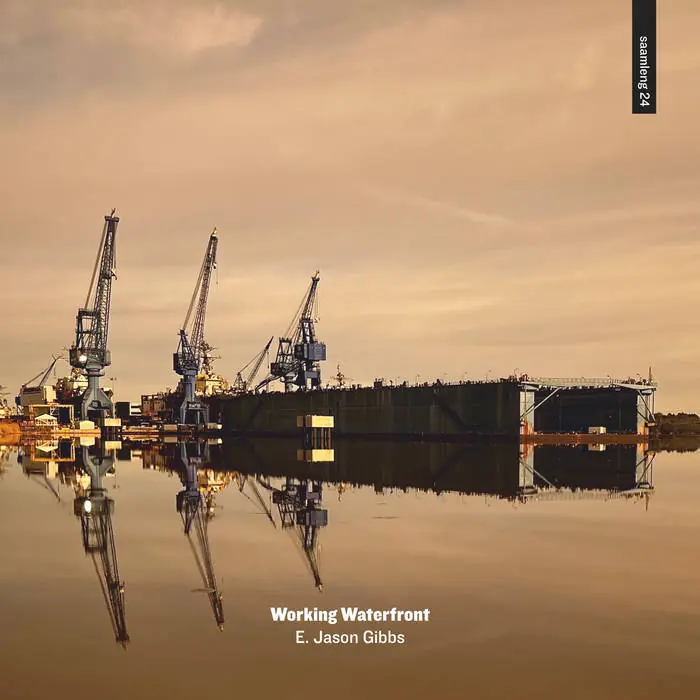
saamleng24
Working Waterfront
E. Jason Gibbs
These recordings were made over a two-year period in Portland, Maine and Lisbon, Portugal.
They are part of an ongoing series investigating the acoustic ecology of working waterfronts, the impact of shipping on ocean ecosystems and the dynamic diversity of maritime soundscapes.
Ocean Gateway
Portland, Maine
An international ferry terminal, cruise ship dock, and city park, Ocean Gateway is an interesting place to listen to the city, especially on an incoming tide. To capture a comprehensive sonic image, these recordings utilise simultaneous microphone arrays: a stereo pair of hydrophones and two pairs of omni microphones positioned across different sections of the terminal. Originally presented as a live quadraphonic performance, this version has been rendered to stereo for this release.
Doca da Marinha
Lisbon, Portugal
Recorded on the Tagus River at a public dock as the day begins. This piece utilises simultaneous arrays – a contact microphone, a hydrophone, and a matched set of omni microphones – to capture this one small part of the city as the morning develops.
Dredging Barge on a Rising Tide
Casco Bay, Portland, Maine
In winter 2025 there was a large-scale dredging operation in Casco Bay. The barge remained active for several weeks, providing an opportunity for extensive documentation of its activities. This recording, made with a matched pair of omni-directional microphones, is my favourite of the barge.
The New Town Dock
Portland, Maine
The new town dock: a large aluminium dock in the harbour, near Ocean Gateway. It is a fabulously noisy thing and a great place to work with all sorts of microphones. This particular recording is made with 2 contact microphones.
Recorded with Sound Devices MixPre-6 II and Sony D100 using Lom microphones, JRF contact mics and hydrophones, Aquarian hydrophones
E. Jason Gibbs is an internationally recognised field recordist, composer, and sound artist whose work has been published throughout the U.S., Britain, and the EU. He is a founding member of Open Systems Studios in Portland, Maine.
Active in experimental music performance and recording since the late 1980s, over the past 10 years his practice has shifted from improvised music to field recording and soundscape composition. Central to the work is the theme of walking and listening as a way of understanding the world. Through travel and exploration, he records the ways humans inhabit and reshape diverse environments.
Recent work focuses on the acoustic ecology of working waterfronts and the impact of shipping on ocean ecosystems. Using condenser, contact microphones, and hydrophones, Gibbs captures the dynamic diversity of maritime soundscapes: the shifting tides and creaking docks of Portland and Lisbon, and the industrial clamour and churn of the Mississippi river in New Orleans. These recordings examine the acoustic footprint of global commerce – the pressure it exerts on waterways and communities, the histories of these places, and the traditional livelihoods of their residents.
01.Ocean Gateway
02.Doca da Marinha
03.Dredging Barge on a Rising Tide
04.The New Town Dock

saamleng25
Temple Soundscapes Series 01: Phra Maha Chedi Tripob Trimongkol
Mirt • Ter
This is an expanded CD edition of the first instalment in a series of soundscape recordings from Buddhist temples in Thailand.
Phra Maha Chedi Tripob Trimongkol, also known as the Stainless Pagoda, is a unique Buddhist temple located on a hill in the far south of Thailand, near the city of Hat Yai in Songkhla Province. The temple is made of chrome tubes and decorated with thousands of small bells – a real oddity for a traveller from Europe, but also a perfect field recording spot.
This edition adds three new recordings to the original album, from 2018, 2025 and 2026 respectively.
01.Phra Maha Chedi Tripob Trimongkol (January 2018)
02.Phra Maha Chedi Tripob Trimongkol (December 2022)
03.Phra Maha Chedi Tripob Trimongkol (February 2024)
04.Phra Maha Chedi Tripob Trimongkol (February 2025)
05.Phra Maha Chedi Tripob Trimongkol (January 2026)
Digital Releases Catalog
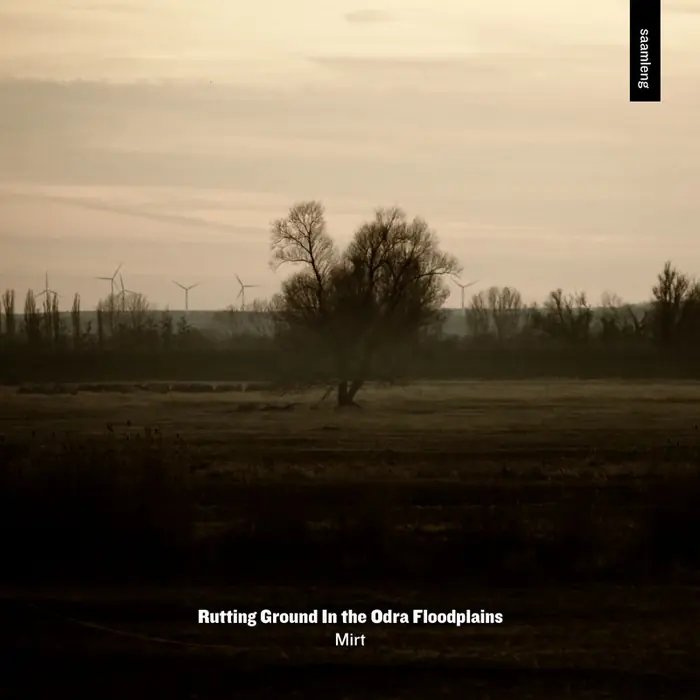
saamlengD01
Rutting Ground in the Odra Floodplains
Mirt
The recording was made in September 2014, during an exceptionally cold night over the Odra River floodplains between the villages of Siekierki and Stara Rudnica. The area where deer descended to the reed beds stretched for kilometres along the river. The dense, wet undergrowth provided ideal rutting ground. Dozens, maybe hundreds of calls could be heard – an absolutely unique sonic phenomenon. Alongside the deer, distant cranes and a tawny owl flying over the microphones can be heard in the recording.
01.Deer Rut Time
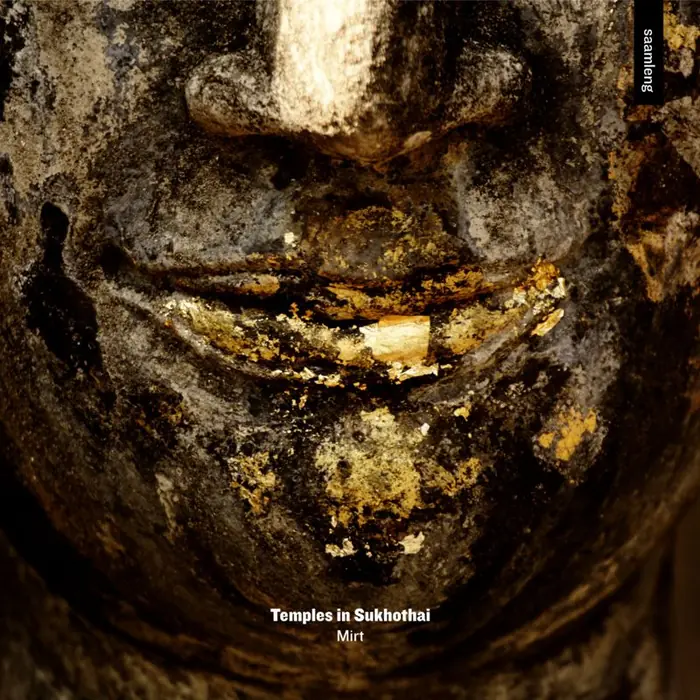
saamlengD02
Temples in Sukhothai
Mirt
Sukhothai was originally a small Khmer city that gained independence in the 13th century, becoming the capital of the first unified and independent Thai state – the Sukhothai Kingdom. Today, the city and its surrounding area contain the ruins of nearly 200 temples. However, their character differs from that of the more famous Ayutthaya. It is easier here to find a place for yourself, and simply enjoy the surrounding countryside sounds uninterrupted. Many smaller temples are located in fields outside the main area of Sukhothai Historical Park, and these small ruins often allow for extended periods of such solitary listening. Sounds of cattle, birds and distant music intertwine. Other temples, more popular and well-preserved, offer extraordinary acoustics, such as Sri Chum Temple, seemingly loved by doves. The recordings were made in December 2015.
01.Countryside
02.Evening at Ton Chan Temple
03.Doves in Sri Chum Temple
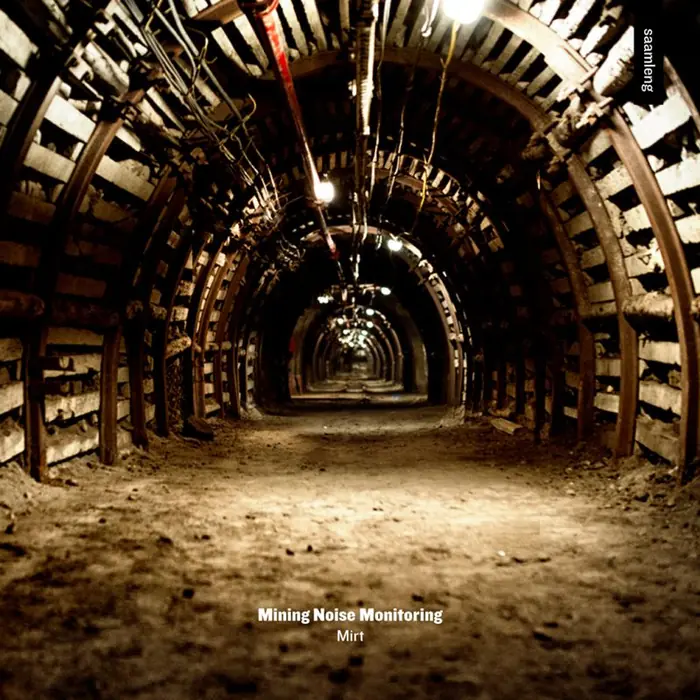
saamlengD03
Mining Noise Monitoring
Mirt
This short album was recorded at the Guido Mine, part of the Coal Mining Museum in Zabrze, during workshops organised by Biuro Dźwięku Katowice. The circumstances allowed only for brief, spontaneous recordings, resulting in a quickly assembled collection of sounds from mining machinery and warning signals.
01.Machine 1
02.Machine 2
03.Warning Signals
04.Mine Railway 1
05.Mine Railway 2
06.Machine 3
07.Machine 4
08.Elevator Hall
saamlengD04
Drinking Horchata
Mirt
Quiet drones and glitches recorded after sipping a lovely cool horchata in Valencia. The album is the result of several days spent wandering the city’s streets and waterfronts, listening with particular attention to all the tiny, strange, almost surreal sounds that seem to form some kind of fleeting urban rhythm and melody. At times, these sounds seem detached from the background, almost like artistic interventions meant to draw our attention to the seemingly ordinary, quiet soundscape around us.
01.Evening in the Docks
02.Street Clock
03.In a Metal Tube
04.Laundry Glitch
05.Bleep
06.Waiting for 10PM
07.Time Switch

saamlengD05
Black Friday
Mirt
This recording dates from March 2018 and was made during the Black Friday (Czarny Piątek) demonstrations against rights abuses committed by the then Polish government. This album serves as documentation, but above all, it shares the same goal as the demonstrations: to oppose far-right, backward-looking governments that violate human and minority rights. It was recorded from the perspective of a participant, not merely a passive observer.
01.Black Friday

saamlengD06
Blue Frogs
Mirt
A recording of the moor frog (Rana arvalis) ending its mating season, made in meadows in Masovia, Poland. One of several recordings in the catalogue that aim to capture sounds once common but increasingly rare in times of climate crisis. A year later, the same phenomenon could no longer be heard – nor recorded – in the same location.
01.Blue Frogs
saamlengD07
Amphibian Choirs Compilation
Mirt
Following the album “Blue Frogs”, released a year earlier, this compilation of frog recordings collected in Poland, Thailand, and Vietnam is another effort to draw attention to the alarming rate of amphibian extinction worldwide, primarily caused by human activity: habitat loss and fragmentation due to wetland drainage and urbanisation, pollution, climate change, and disease.
01.Drainage Ditch – Ninh Binh, Vietnam
02.Odra Backwater I – Siekierki, Poland
03.Breeding Ponds – Siekierki, Poland
04.Swamp – Tarutao Island, Thailand
05.Odra Backwater II – Siekierki, Poland

saamlengD08
Studies On The Production Of Underwater Sounds
Mirt • Ter
The recordings were made in early January 2020 at two locations along the partially ice-covered Narew River. An Aquarian Audio H2a hydrophone was used to capture the sound. The recording focuses on the timbres of water flowing between stones and melting ice.
01.Narew 17 km vol. I
02.Narew 22 km vol. I
03.Narew 22 km vol. II
04.Narew 17 km vol. II
05.Narew 17 km vol. III
06.Narew 22 km vol. III
07.Narew 17 km vol. IV
saamlengD09
Resonance
Mirt
In a sense, this album anticipates the lockdown that began a few days after its release. It focuses on the sounds of our immediate surroundings, home and workplace. We mainly listen to mechanisms, the hum of transformers and lamps, and interference. Most of the time, we don’t hear living organisms. The human activity we sometimes hear seems completely impersonal, even ghostly.
01.Water I
02.Intercom I
03.Freight Lift
04.Fluorescent Lamp I
05.Neon Sign
06.Fluorescent Lamp II
07.Radio Glitch
08.Under The Bridge
09.Traction Power Network
10.Water II
11.Intercom II
12.Power Transformer in the Forest

saamlengD10
Snow and Trains
Mirt
This is a collection of three recordings made in the forests around Legionowo during the COVID pandemic. The material later became the basis for the album State of Matter. An unexpected, heavy fall of fine snow drew our attention to the wide range of winter sounds tied to freezing water. On their own, though, the recordings on Snow and Trains explore another aspect: how snowfall changes the acoustic space. The sound of passing trains spreads through air full of tiny ice crystals in a way quite unlike what we hear every day.
01.Snow and Trains 1
02.Snow and Trains 2
03.Snow and Trains 3

saamlengD11
Bartołty Małe
\\'
Prepared by Wojciech Wilk, this material explores how the calls of frogs, sometimes accompanied by fire-bellied toads and birds, change in dynamics over the course of a full day-night cycle. It was recorded near the village of Bartołty Małe during the first few days of June 2021. Bartołty Małe is a small forest village in the Warmian-Masurian region of northern Poland, bordering numerous small lakes.
01.Świt
02.Dzień
03.Polifonia
04.Noc
saamlengD12
Low Tide Recordings
Mirt
A collection of hydrophone recordings made in the coastal waters near the village of Uroa in Zanzibar, focusing on the sounds of marine algae photosynthesising. The algae release tiny oxygen bubbles at varying, fluctuating rates. These rates sit at the edge of the human hearing range, so the bubbles sometimes seem to merge into one continuous tone, and elsewhere break apart into separate clicks and pops. The almost machine-like stability and timbres of these signals contrast with the organic environment around them, which shifts constantly with the tides.
01.01
02.02
03.03
04.04
05.05
06.06
07.07
08.08
09.09
10.10
11.11
12.12
13.13
14.14
15.15
saamlengD13
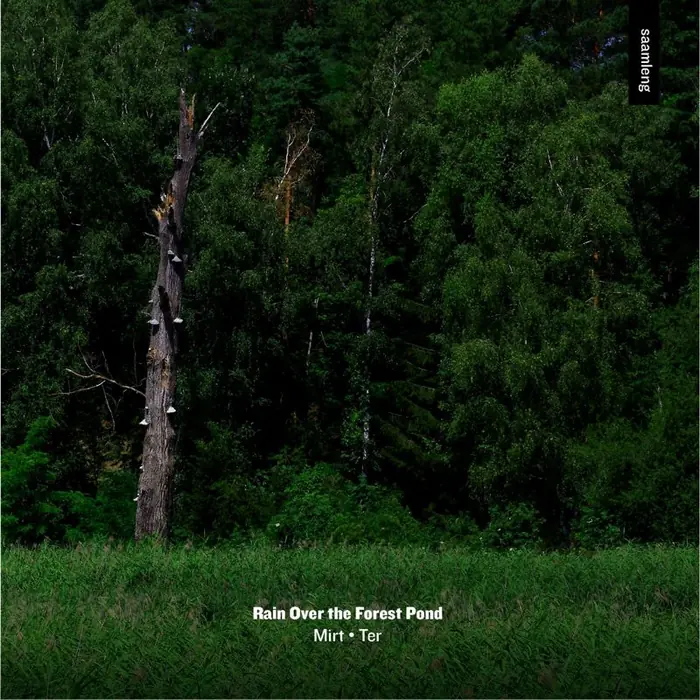
Rain Over the Forest Pond
Mirt • Ter
The album contains a single long recording made in a forest beside fish ponds, a short distance from the village of Siekierki in the West Pomeranian region. The ponds were built before the Second World War, and they and their immediate surroundings have gone through many changes. We often visited them during summer holidays, and in our memory they remain a place dominated by nature. They lie in the middle of a triangle formed by the villages of Siekierki, Żelichów and Stara Rudnica, and always seemed cut off from anthropophony. When we recorded there in 2021, we found them changed once again: the ponds were back in use, and a new cycle path nearby gave easy access to the wild land along the small river that runs through the area. Nature still clearly dominates the soundscape, but the din from the nearby villages breaks through now and then. The biophony, however, is quieter and less varied than we remember it from just a few years before. Under the rain, something of the past soundscape returns.
01.Rain Over the Forest Pond

saamlengD14
Guy Wire by the Railway Track
Mirt
Recorded with a MixPre-3, a Lom Geofón and a DIY geophone.
Bear in mind that the geophones can record only the lowest audible frequencies.
Guy wires taut in winter act like sympathetic strings, excited by ambient noises such as those of passing trains. Be careful when listening, as this recording has a large dynamic range: very quiet most of the time, but with sudden loud peaks.
Guy wires taut in winter act like sympathetic strings, excited by ambient noises such as those of passing trains. Be careful when listening, as this recording has a large dynamic range: very quiet most of the time, but with sudden loud peaks.
01.Guy Wire by the Railway Track
saamlengD15
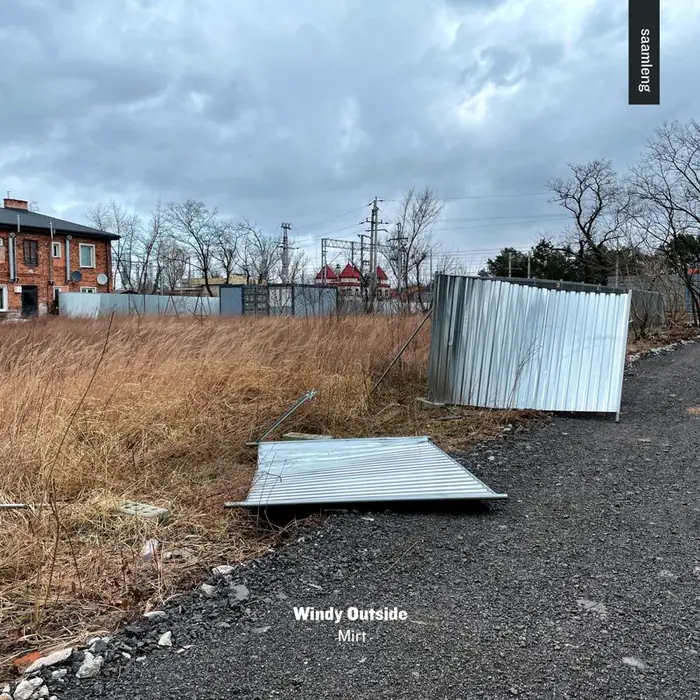
Windy Outside
Mirt
By February 2022 everyone had grown used to the pandemic, and the long winter days left me desperately searching for ideas and chances to record anything at all close to home. Help came from a gusty wind that announced the slow approach of warmer weather. The gale did more than blow small litter around the empty streets. It also set sheet-metal fences and other loose metal parts in motion. In these conditions, a geophone and contact microphones turned out to be the perfect tools for exploring a hidden dimension, soundscapes beyond the reach of the unaided ear. Each new gust became an ideal exciter for metallic resonances accompanied by a dispersion of frequencies that sounds alien to the ear.
01.High Voltage Traction Pole
02.Damaged Metal Fence
03.Wobbly Street Lamp
04.Makeshift Fence
05.Guy Wire 1
06.Railway Traction Pole
07.Guy Wire 2
saamlengD16
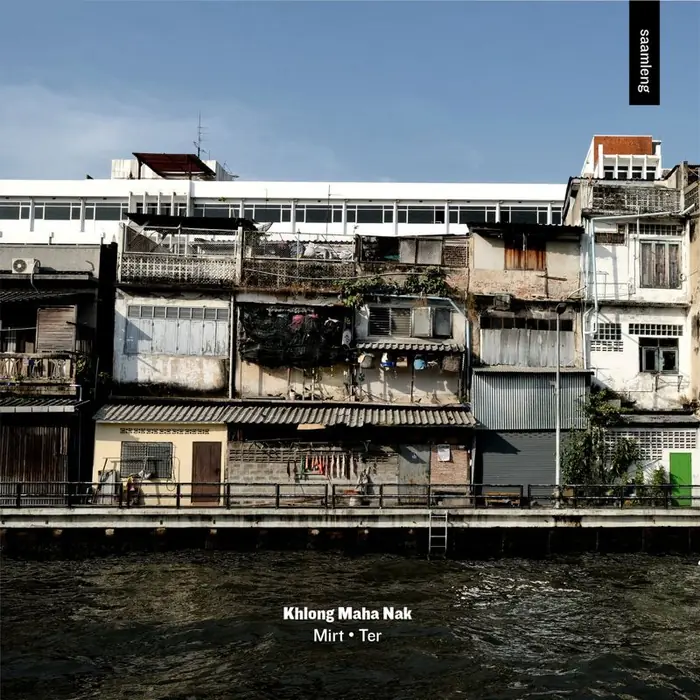
Khlong Maha Nak
Mirt • Ter
Khlong Maha Nak (Mahanak Canal) is one of Bangkok’s oldest canals, once one of the most important communication routes through the city, now replaced by jammed highways, Skytrains and subways. Today, narrow paths by the canals, usually calm, forgotten and avoided by tourists, seem to be the best place to travel back in time and to find a hidden, different city. These 40 minutes recorded at Khlong Maha Nak is our tribute to Bangkok.
01.Before Noon
02.In the Afternoon
saamlengD17
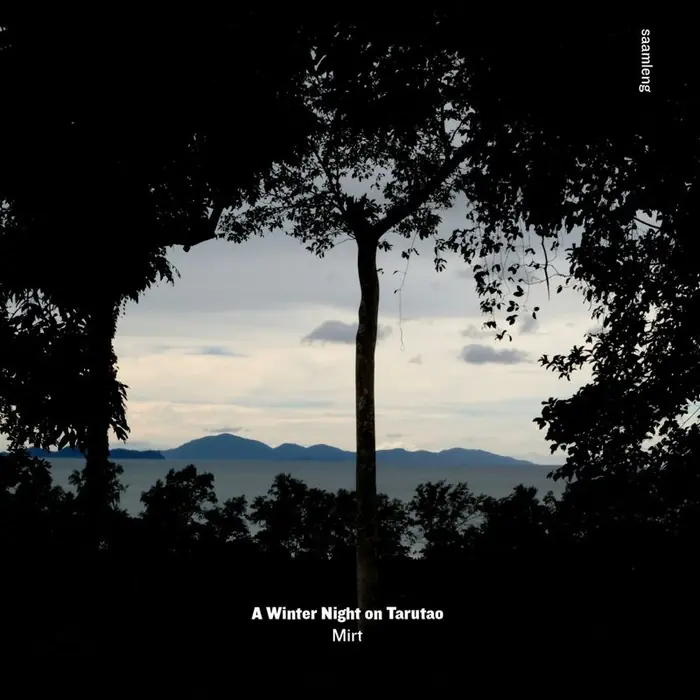
A Winter Night on Tarutao
Mirt
Please take the title literally: this is a recording of an entire long December night on Tarutao Island, from dusk to dawn, presented virtually unedited for an extreme, immersive experience. It was made with a drop rig that recorded continuously, with no one present. Only a few minutes were trimmed from the beginning and the end, where you could hear the microphones being set up and taken down. The whole rig was mounted on a trunk using the “tree ears” technique, a few dozen metres into the forest, near a rarely used road that crosses the island.
01.Part 1
02.Part 2
03.Part 3
04.Part 4
05.Part 5
06.Part 6
07.Part 7
08.Part 8
09.Part 9
10.Part 10
11.Part 11
12.Part 12
13.Part 13
14.Part 14
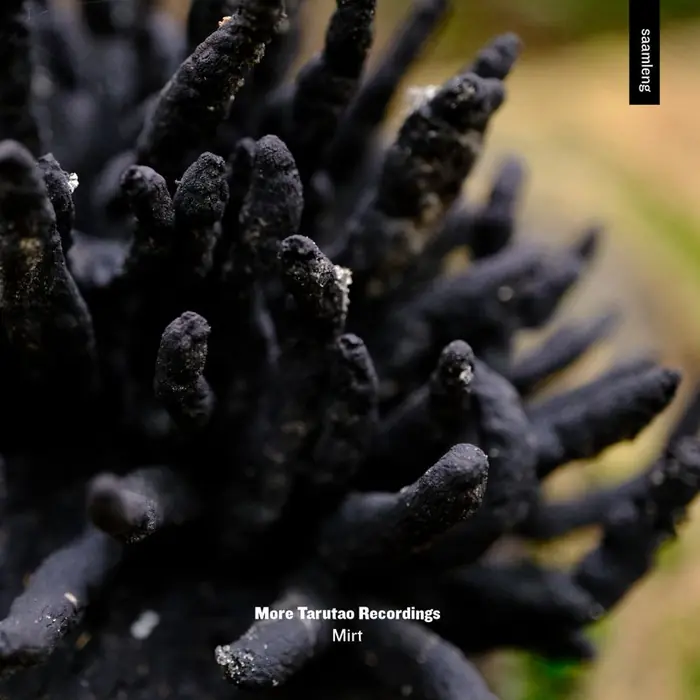
saamlengD18
More Tarutao Recordings
Mirt
This is another part of an ongoing series of recordings made on Tarutao Island. A kind of appendix collecting previously unreleased tracks worth listening to. This time, the entire album focuses on the overall soundscape of the island and is a collection of random recordings I made during my last trip to Tarutao Marine National Park including sounds captured in the camp on Pante Malaca beach. Tracks 1 and 3 are excerpts from drop-rig recordings made with no human presence on site and seem particularly interesting. Although these are not binaural recordings, I recommend listening with headphones.
01.Dawn Chorus
02.More Birds
03.More Monkeys
04.More Cicadas
05.Soft Rain in the Camp
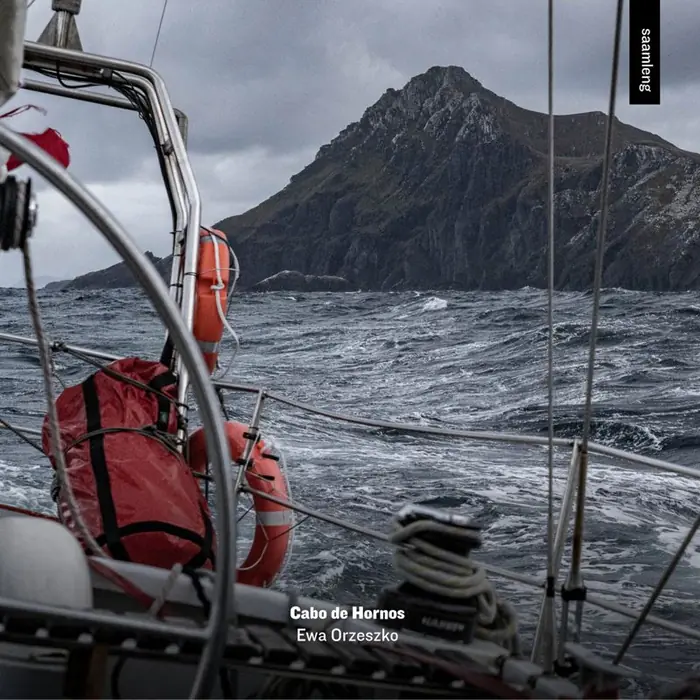
saamlengD19
Cabo de Hornos
Ewa Orzeszko
This is a unique set of recordings made on board the Selma while sailing around Cape Horn (April 12–13, 2023). The boat itself is the centrepiece of the album. Every creak and small sound produced under the pressure of the elements all around resonates in its unusual acoustics, heightening the sense of isolation and the disproportion between the two spaces – outside and inside. Only the occasional muffled voices of the crew pull us out of this suspended state. The last recording, made on Calle Florida in Buenos Aires (April 22, 2023), stands in sharp contrast to the rest of the album and underlines how extraordinary the recordings from the boat are.
01.Selma vs. Horn
02.By the Wind
03.Mess Talks
04.Offshore
05.Horn vs. Selma
06.Mast
07.Point of
08.Cambio Cambio

saamlengD20
Birds and Bees
Jacek Chmiel
A collection of recordings by Jacek Chmiel, made during a residency in Switzerland in 2023. The album sets two seemingly similar soundscapes against each other: one dominated by insects, the other by birds. Three intense recordings of bees, highlighting the dense micro scale, the closeness and the particular acoustics of the hive, are followed by a recording of birds. It creates a striking contrast, shifting the focus to the acoustics of open space and a soft reverb with a long decay.
01.Bees 1
02.Bees 2
03.Bees 3
04.Birds (Garden)
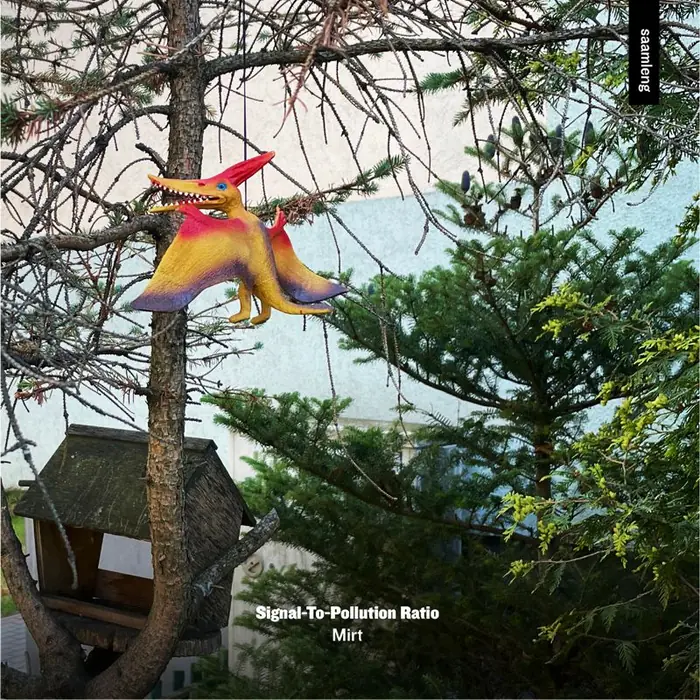
saamlengD21
Signal-To-Pollution Ratio
Mirt
Through field recording, we often try to escape from the sounds for which we ourselves are responsible. However, in reality, this escape is impossible or at least extremely difficult.
This collection of recordings was created during walks around my place of residence – suburbs of a big city. I was involuntarily looking for pieces of nature, small forest tracts, and undeveloped parts of the river bank.
In reference to Gordon Hempton’s work, this could be called a private, subconscious search for “One Square Inch of Silence” – a search in which I have failed completely.
Signals struggle to get through the pollution.
01.High Voltage Traction in the Middle of the Forest 1
02.Spring in the Forest
03.Cuckoo
04.In the Crown of a Tree in the Yard
05.By the River
06.High Voltage Traction in the Middle of the Forest 2

saamlengD22
Bangkok Protests
Mirt
The material was recorded one November day during anti-government protests in Bangkok, later called the Thai Political Crisis (2013–2014).
It was one of the first days of the demonstrations. I was merely a witness to the recorded events that took place on the streets of the capital of Thailand. The first recordings come from the outskirts of the demonstrations, the next ones I recorded while moving with the crowd, slowly getting closer to the epicentre of the events. The last recordings were made at a distance, outside the demonstration area.
It was one of the first days of the demonstrations. I was merely a witness to the recorded events that took place on the streets of the capital of Thailand. The first recordings come from the outskirts of the demonstrations, the next ones I recorded while moving with the crowd, slowly getting closer to the epicentre of the events. The last recordings were made at a distance, outside the demonstration area.
01.Bangkok Protests 1
02.Bangkok Protests 2
03.Bangkok Protests 3
04.Bangkok Protests 4
05.Bangkok Protests 5
06.Bangkok Protests 6
07.Bangkok Protests 7
08.Bangkok Protests 8
09.Bangkok Protests 9
10.Bangkok Protests 10
11.Bangkok Protests 11
12.Bangkok Protests 12
13.Bangkok Protests 13
14.Bangkok Protests 14
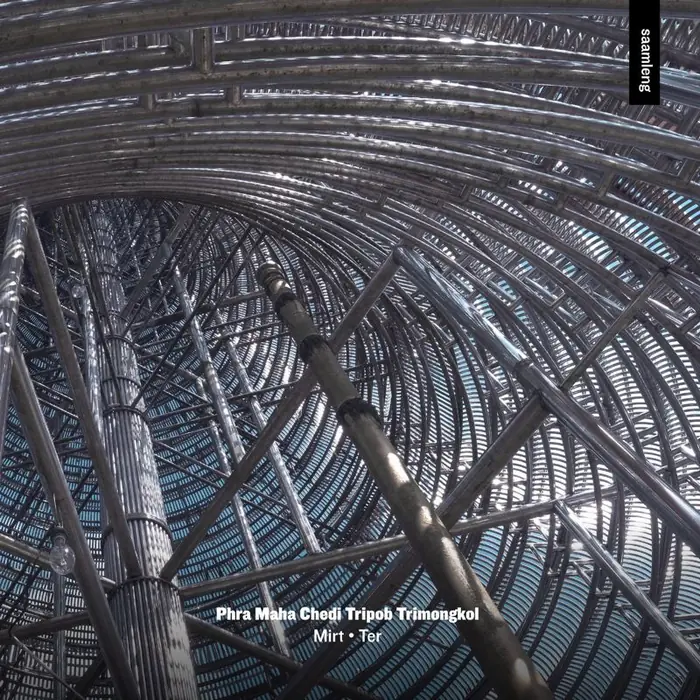
saamlengD23
Temple Soundscapes Series 01: Phra Maha Chedi Tripob Trimongkol
Mirt • Ter
This is the first instalment in a series of soundscape recordings from Buddhist temples in Thailand. This digital edition has since been expanded and reissued on CD as saamleng25 – the link below leads to the new edition.
Phra Maha Chedi Tripob Trimongkol, also known as the Stainless Pagoda, is a unique Buddhist temple located on a hill in the far south of Thailand, near the city of Hat Yai in Songkhla Province. The temple is made of chrome tubes and decorated with thousands of small bells – a real oddity for a traveller from Europe, but also a perfect field recording spot.
The first track was recorded in December 2022 during our second visit to the Stainless Pagoda and the second one in February 2024.
If you like these recordings, you can also check out an album released by Szara Reneta, where you’ll find another recording of this chedi: szarareneta.bandcamp.com/album/eastern-holy-ground.
01.Phra Maha Chedi Tripob Trimongkol (December 2022)
02.Phra Maha Chedi Tripob Trimongkol (February 2024)
saamlengD24
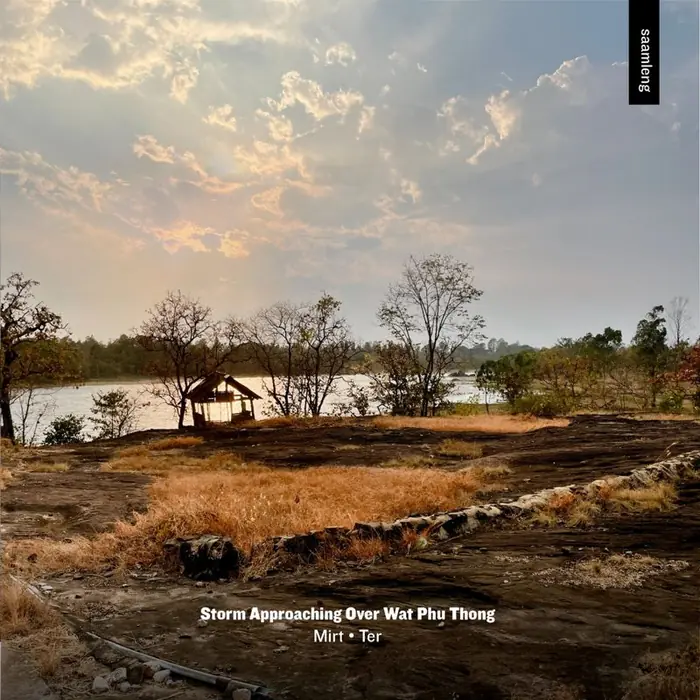
Temple Soundscapes Series 02: Storm Approaching Over Wat Phu Thong
Mirt • Ter
This is the second instalment in a series of soundscape recordings from Buddhist temples in Thailand.
It was recorded near Wat Phu Thong – a Buddhist temple and Dharma practice centre located near the remote village of Sai Mun in Ubon Ratchathani Province, Thailand. A place seemingly abandoned, located on a low rocky hill among fields and dry steppe meadows, near a small pond. Usually, this soundscape is quiet, dominated by distant countryside noises and the surrounding nature, but this time we heard a storm approaching, which was unusual in the dry season.
It was recorded near Wat Phu Thong – a Buddhist temple and Dharma practice centre located near the remote village of Sai Mun in Ubon Ratchathani Province, Thailand. A place seemingly abandoned, located on a low rocky hill among fields and dry steppe meadows, near a small pond. Usually, this soundscape is quiet, dominated by distant countryside noises and the surrounding nature, but this time we heard a storm approaching, which was unusual in the dry season.
01.Storm Approaching Over Wat Phu Thong
02.Asian Koel and the Wind

saamlengD25
European Nightjar vs the Anthropocene
Mirt
If it weren’t for cars, planes, dogs and the barely perceptible bass rumble of the metropolis, it would be quiet. You would only hear the prolonged drone of the nightjar’s call, the sounds of other birds and sparse ticks of crickets. A nightjar, whose continuous churring seems to echo, or mock, the ever-present anthropophony. Somewhat like the monotonous sound of machinery, yet distinct and unique in its timbre, the call never quite becomes just another part of the surrounding din.
01.European Nightjar vs the Anthropocene I
02.European Nightjar vs the Anthropocene II

saamlengD26
Letter from Ceylon
Michał Wiśniowski
Recordings from places we visit often feel like postcards. Michał Wiśniowski, however, sends us a letter from Sri Lanka. On the one hand, this seems to acknowledge that our contact with places where we spend only days or weeks is fleeting and somewhat superficial. On the other, the gesture of sending a letter, not just a postcard, carries a wish to look wider and immerse ourselves more attentively. What we receive is a rich collection of recordings that focus on details and single events rather than wide shots, creating a kaleidoscopic effect and leaving plenty of room for interpretation and further exploration by the listener.
01.Entrance
02.Today is a New Day
03.Dialogues
04.Tea and Train
05.I Have Something Important to Tell You
06.Rainy Season I
07.Thick Air and Cicadas
08.Singers, Vendors and Others
09.Resting by the Water
10.Drizzle in the Jungle
11.Crows and Me
12.Monster Wave
13.Rainy Season II
14.The End Has Come
saamlengD27
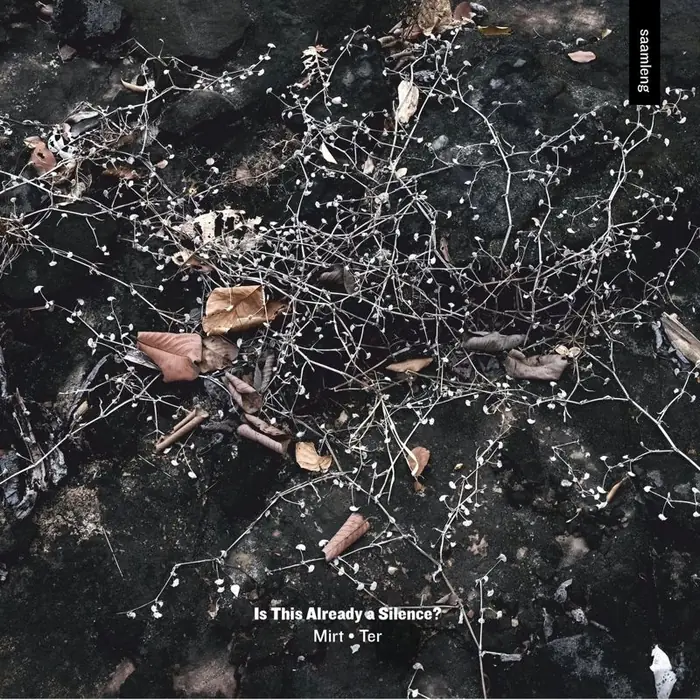
Is This Already a Silence?
Mirt • Ter
This may be the most demanding album in the Saamleng catalogue. The recordings were made in exceptionally quiet places in Pha Taem and Kaeng Tana National Parks. They are best heard on headphones, somewhere no outside noise can reach you. Bear in mind that most of the sounds you will experience came from a considerable distance. The album is as much about these unusually quiet soundscapes as about what our perception is capable of, how we listen and how we hear. It is also about quietude and silence itself, which are growing rarer and all the more precious. It asks about the relationship between our senses and silence, how we respond to it, and the focus it demands.
01.Sao Chaliang Yai I
02.Sao Chaliang Yai II
03.Kaeng Tana I
04.Kaeng Tana II
05.Twin Pillars at Khong Chiam I
06.Twin Pillars at Khong Chiam II
07.Twin Pillars at Khong Chiam III
saamlengD28
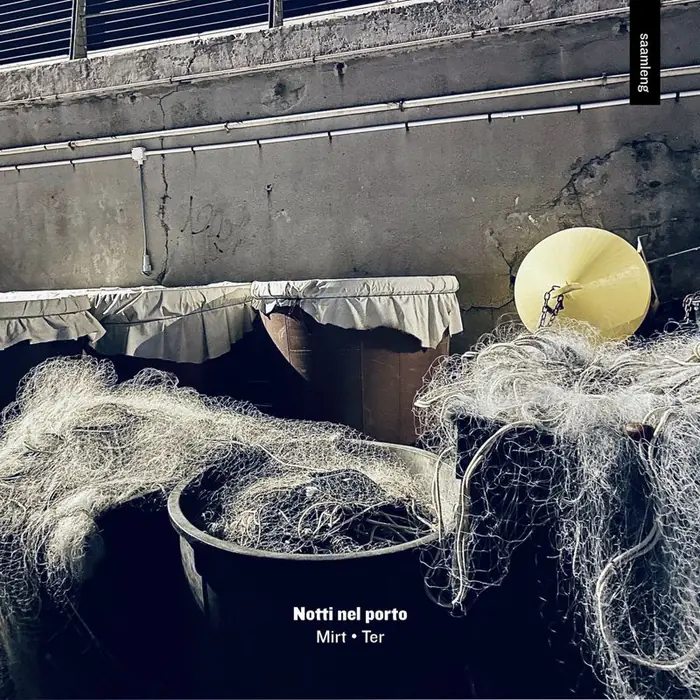
Notti nel porto
Mirt • Ter
Harbours always draw us in with their distinctive soundscape. Especially in the evening and at night, they seem the ideal place to listen. They are remarkable enclaves within busy coastal towns, marking out a separate, autonomous zone that is rich in sounds of its own and also gathers those drifting in from the city. Though strongly anthropophonic, harbours are a uniquely liminal space, a border where human sounds meet geophony and biophony. The album collects several recordings made in the harbour of San Remo in September 2024.
01.Buoy Rope
02.Boats at the Pier
03.Water Splashes
04.Masts on the Other Side of the Bay
05.Windy Evening I
06.Windy Evening II
07.San Remo
08.Behind the Breakwater
saamlengD29
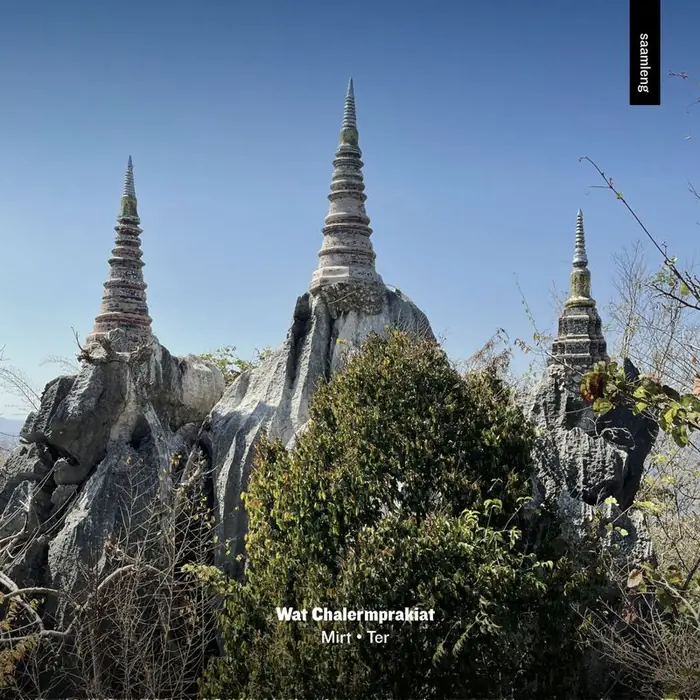
Temple Soundscapes Series 03: Wat Chalermprakiat
Mirt • Ter
This is the third instalment in a series of soundscape recordings from Buddhist temples in Thailand.
In January and February 2025, we recorded soundscapes of multiple temples in Northern Thailand in our ongoing mission to find unique places situated off the beaten track, with a less tourist-oriented character. We focused on smaller temples we found on mountaintops, on the outskirts of cities or villages, with very few and only local visitors. Some of them looked abandoned.
Wat Chalermprakiat is the exception on our trail as it is quite a well-known temple in Lampang Province. However, it is located in a remote area, so getting there takes time and once you reach the destination – with some luck – you’ll find just a few Thai visitors wandering around there. Wat Chalermprakiat fully deserves its common name “The Sky Pagoda” as a couple of chedis forming the temple are situated on the peaks of a very high mountain. Getting to the top requires climbing quite a few stairs, which limits the number of visitors, especially during the scorching hot days without any breeze.
One such moment, just before noon, is captured in our recording. Most of the time, it is very quiet with just a light breeze tinkling small bells. The silence is occasionally interrupted by individual visitors talking to themselves and sounds of large bells and gongs struck for good luck, so be careful with the volume as this recording has quite an extreme dynamic range!
01.Wat Chalermprakiat
saamlengD30
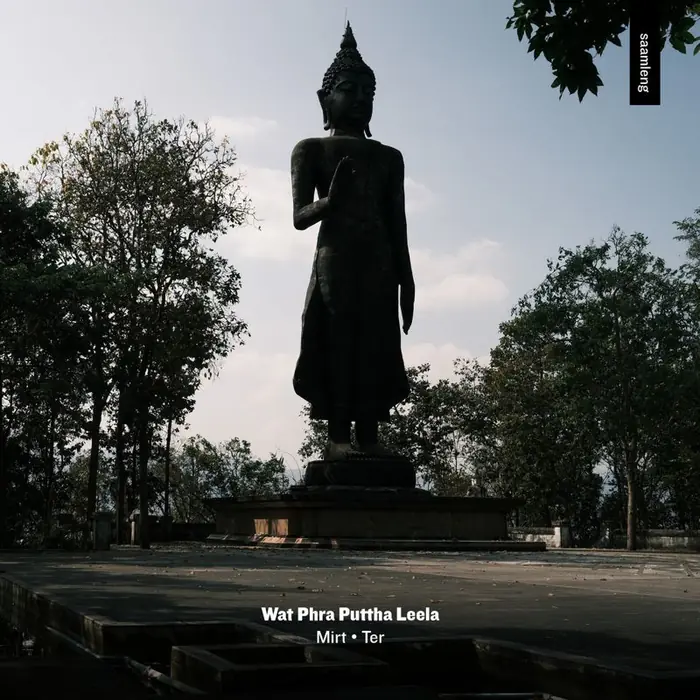
Temple Soundscapes Series 04: Wat Phra Puttha Leela
Mirt • Ter
This is the fourth instalment in a series of soundscape recordings from Buddhist temples in Thailand.
Wat Phra Puttha Leela lies a dozen or so kilometres from the town of Phayao and two or three kilometres from the larger Wat Analayothipyaram (stay tuned for sounds from that one too!). Few tourists make it to Wat Analayothipyaram, but Wat Phra Puttha Leela, hidden on another hill, usually remains completely unnoticed. This is exactly what we look for: you can spend hours there without being disturbed. A large metal statue of a standing Buddha towers over the temple, which is surrounded by a forest inhabited by the pride of Phayao province – wild peacocks.
During the hot days of the dry season, the quiet soundscape is dominated by the sparse sounds of metal being deformed by the wind and changing temperatures. The statue makes its presence known visually and audibly. Occasionally, you can hear the loud calls of peacocks. In the background, the typical sounds of Thai rural temples during dry winter months – distant motorbikes, quiet bird calls and large dry leaves being blown across the stone floor by the wind.
01.Wat Phra Puttha Leela
saamlengD31
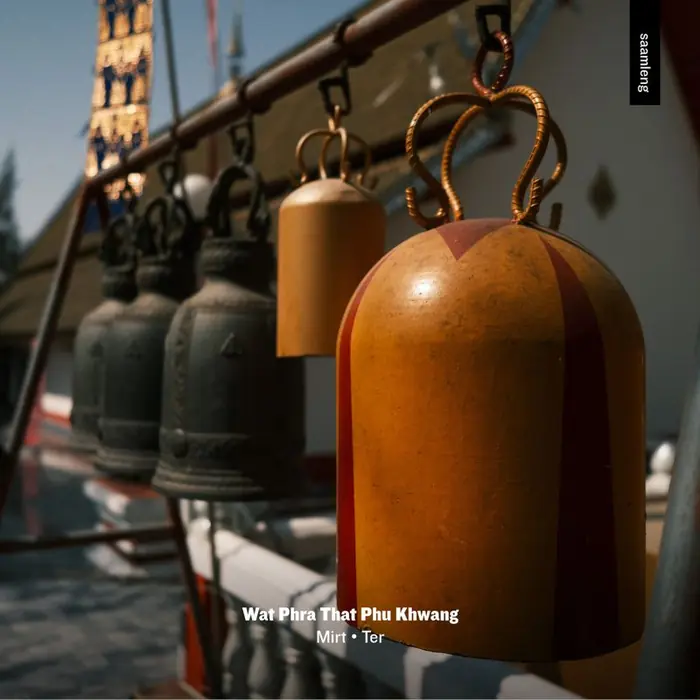
Temple Soundscapes Series 05: Wat Phra That Phu Khwang
Mirt • Ter
This is the fifth instalment in a series of soundscape recordings from Buddhist temples in Thailand.
Wat Phra That Phu Khwang is another temple from Phayao Province. To complicate matters a bit more, this is not the only temple of this name in Phayao. (The other one lies not far to the south.) This is also another hilltop temple, further out of the city. The trees around it were obscuring the view of the surrounding area, but our attention was still focused on what was inside.
Although we were the only visitors, the temple was bustling with activity. A few young monks and other local boys were sweeping the temple floor with brooms, while also pouring large buckets of water over it. There was a lot of chatter and laughter that you wouldn’t expect in such places. The wind was rattling the bamboo flagpoles. The clattering sound was making the soundscape even busier and far from anything you might consider meditative or sacred, but still there was something calming in observing the ordinary, everyday life of a Buddhist temple. At least for us it was!
Usually, in such remote places, we met few visitors, sometimes only a solitary monk. So we were surprised by the hospitable group of locals in Wat Phra That Phu Khwang. The recording is also quite short for this reason. Being a big attraction as the only foreigners around, we were quickly offered some water and invited to strike the quite large gongs decorating the temple front – for good luck!
01.Wat Phra That Phu Khwang
saamlengD32
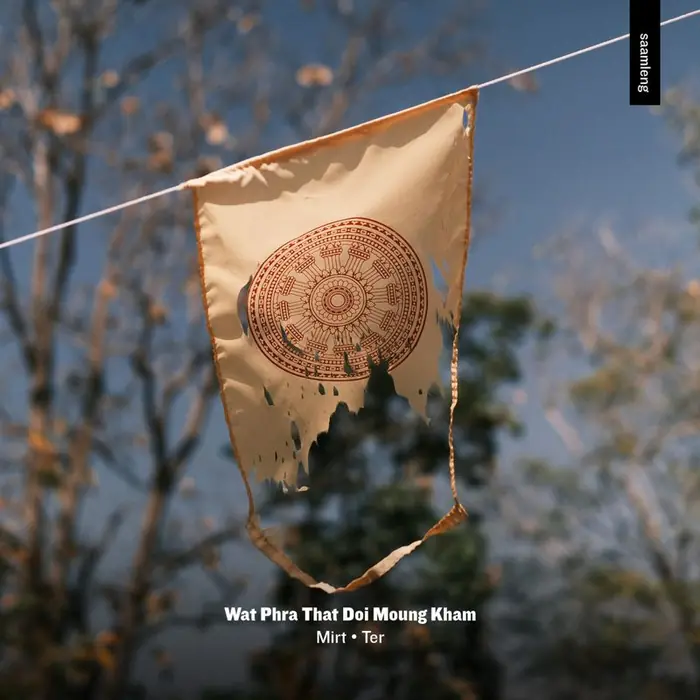
Temple Soundscapes Series 06: Wat Phra That Doi Moung Kham
Mirt • Ter
This is the sixth instalment in a series of soundscape recordings from Buddhist temples in Thailand.
This was one of the first temples we visited during our trip in early 2025. When we arrived, it was empty, but we felt as if someone had been bustling around there just a moment earlier. The temple was not new; it had been damaged by the passage of time, but somehow it did not feel abandoned. In fact, it seemed like everyone had just disappeared a minute earlier, although there was no clear indication of that, no candles burning out, no scent of votive incense dissolving in the air.
The temple is located in Lampang Province outside of the city, and it was only our curiosity that made us leave the main road to see it. While driving through rural Thailand, you pass many gates marking the entrance to temples, and it is definitely safe to say that Wat Phra That Doi Moung Kham is just another typical Thai temple somewhere in the middle of nowhere. However, there are small details that set it apart – at least for us – like the balcony overlooking the surrounding area with mountains to the left and the village to the right. In the afternoon, that balcony is immersed in sunlight. On the other hand, the shade abundant in the small, dark interior protects the visitor from that scorching sun. The silence we found there and the weathered colours emanated a peculiar kind of tranquility.
This is exactly where we decided to pay more attention to the modest chedis that were adorning some of the hills along the way, just like Wat Phra That Doi Moung Kham.
Sitting in the temple for an hour or so, we mostly heard distant sounds from the villages, sometimes birds. The light breeze, the sun-kissed details like small chapels, an old cheap gong and plastic decorations, everything was coming together to form an exceptionally harmonious whole. It was as meditative as it gets. We sat there for a long time and it was really difficult to convince ourselves to leave this place.
01.Wat Phra That Doi Moung Kham
saamlengD33
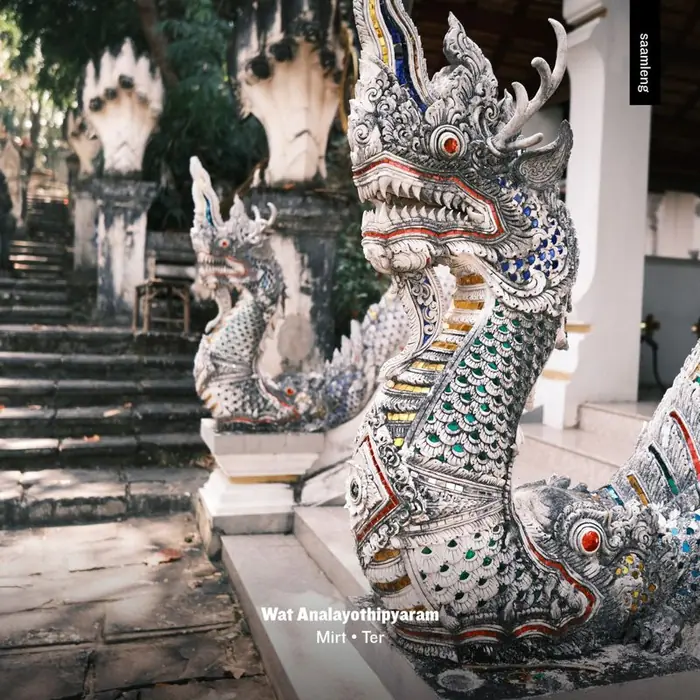
Temple Soundscapes Series 07: Wat Analayothipyaram
Mirt • Ter
This is the seventh instalment in a series of soundscape recordings from Buddhist temples in Thailand.
Wat Analayothipyaram is a large temple complex. Its numerous buildings, chedis and Buddha statues lie in the shade of the trees covering the hill. It combines multiple styles, giving it a bit of the feel of an amusement park with various attractions. It is located a few kilometres outside the town of Phayao and it looks as if it was built with the big crowds visiting the town and its lake in mind.
We’re not sure whether the place has already seen better days or is still waiting for those crowds. When we visited, the long staircase connecting the temple to the car park with a row of buildings set up as stalls was overgrown with large bushes. The temple itself was in better condition and we met several Thai families at the entrance. The burning candles also indicated even more visitors and gave the entrance a slightly livelier feel, as if we had just caught a break between larger tours. There were also some signs of maintenance work inside.
Still, wandering around the vast Wat Analayothipyaram brought back the feeling of abandonment. This feeling was reinforced by the fact that the whole place was divided into smaller individual courtyards and terraces. It looked like a shaded labyrinth. The other visitors were only present in the form of the occasional dissonant sound of large bells and the muffled beats of temple drums. Some sounds were coming only from behind a hedge, and others were echoing from distant spots at the edge of the temple complex, but the recording is dominated by the static of the wind blowing through the trees and the ringing of the individual bells adorning the nearby pagoda. It seems to be a good soundtrack to what we saw there.
01.Wat Analayothipyaram

saamlengD34
Temple Soundscapes Series 08: Wat Phayanakharat
Mirt • Ter
This is the eighth instalment in a series of soundscape recordings from Buddhist temples in Thailand.
Wat Phayanakharat is hidden away a kilometre behind the garden surrounding the Memorial to the Enlightenment of Luang Pu Khao Analayo. Both places are situated near the village of Long Khot in Chiang Mai Province. The temple is located on the slopes of a mountain range covered with forest and dense bushes.
The half-abandoned temple is exactly what we are looking for while wandering through remote villages in Asia. A bit ugly but intriguing with strange architecture and crude, primitive carvings, victims of some amateur artist who decided to leave his or her distinctive mark on them. Everything here is unique and different from what we have seen before. Sculptures of the Naga serpent that might as well have taken inspiration from Aztec art. Chedis made of cheap metal roof tiles are placed on a concrete platform dotted with flashy tiles of various kinds. They form a pattern, but still seem chaotic. No less disturbing is the placement of numerous statues inside. The stairs leading to the chedi placed on a high platform resemble an emergency corridor from some industrial facility. On one side, the entrance is guarded by a large concrete elephant disturbing the symmetry. Many Thai temples have a rather traditional look, they are quite similar to each other, so this one is a real treasure.
The soundscape of this place is a strange combination. In the afternoon, you can hear the typical sounds of birds hidden among the treetops. Then, the entire structure, under the influence of the scorching sun, deforms with a characteristic metallic murmur. From a distance, you hear the sounds of nearby villages, the echoing melancholic luk thung music (or is it molam?). Trucks are passing by and sometimes signal their presence with the nasal sound of their horns.
We didn’t meet anyone in the temple itself or at the foot of the mountain, where we were passing buildings inhabited, I assume, by just a few monks taking care of that place. Maybe their attention was already focused only on the shiny new Memorial to the Enlightenment, a realistic representation a dozen or so metres high of the monk Luang Pu Khao Analayo surrounded by a manicured garden. These two places seem to be polar opposites.
01.Wat Phayanakharat
saamlengD35
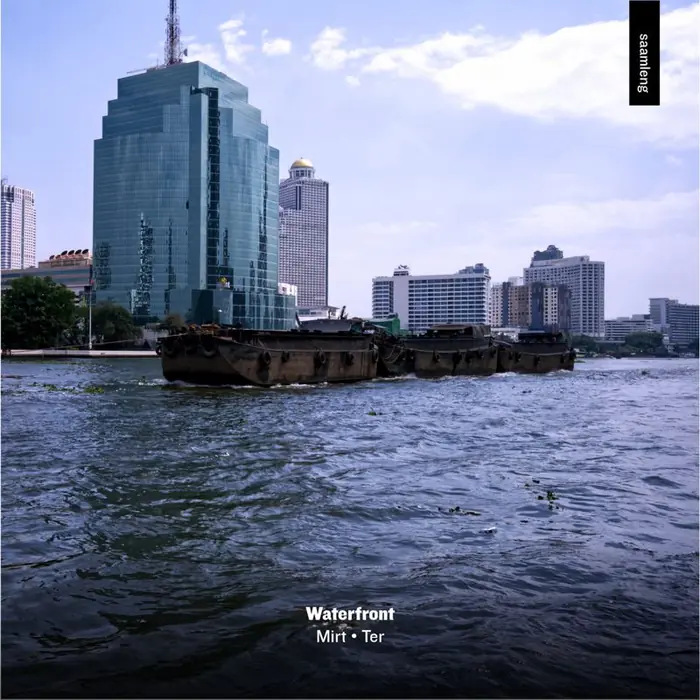
Waterfront
Mirt • Ter
With small exceptions, all of these recordings were made around the piers of the busy Chao Phraya River in central Bangkok. Access to the river is difficult due to extremely dense development; the numerous small piers can only be reached through narrow passages. In the vicinity of the old town there are only a few points where you can freely observe the Chao Phraya waters. The river itself resembles the city it flows through. Thick as a soup, its waters are being constantly churned by passing long-tail boats, barges, cruise ships, and ferries. The movement of all these vessels heading in different directions seems to be absolutely chaotic. Looking at all this, you expect a collision at any moment. The bricked-up banks look like a patchwork made with metal piers constantly moved by the waves. They crackle and creak at different volumes and with different timbres. They seem to be some form of a strange, alien organism vocalising when agitated. First, the sound is abrupt and loud, but then they begin to calm down, making their voices longer and quieter. The piers and flocks of boats move in an organic way. It is easy to imagine you are observing some kind of mechanical fauna. It is a sad but addictive sight.
01.Khlong San Pier
02.Evening at Tha Tian
03.Styrofoam in the Water
04.Si Phraya Pier
05.Rachawong Pier
06.Afternoon at Maha Nak Canal
07.Another Evening at Tha Tian
saamlengD36
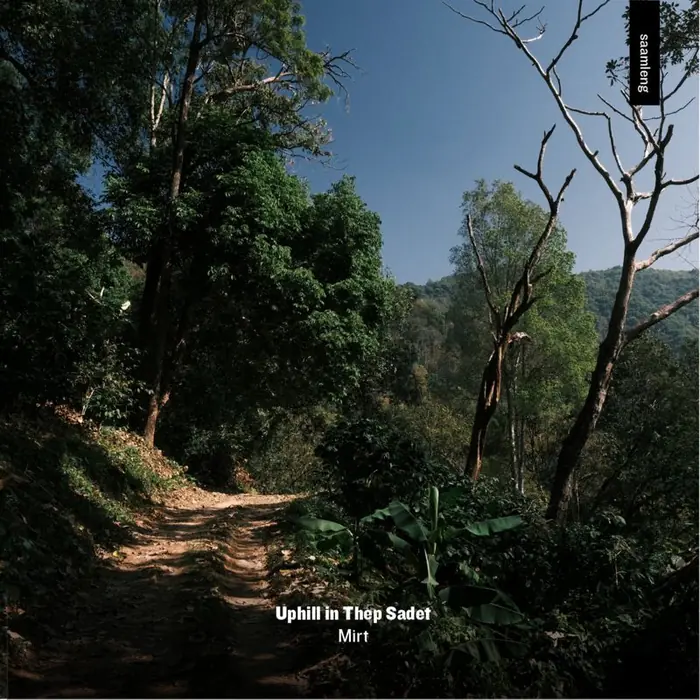
Uphill in Thep Sadet
Mirt
This is a collection of nature soundscapes recorded in the Thep Sadet tambon (sub-district) of Doi Saket District, Chiang Mai Province, Thailand. They were collected during a three-day trip in February 2025.
Thep Sadet is part of Khun Tan mountain range. The hills are covered with lush forest and seem wild but they are dotted with small coffee plantations and hidden improvised huts. The mountains are crisscrossed with narrow paths marked by deep furrows carved by the rain. Paths seem impossible to cross, but the sounds of distant scooters prove this is only an impression.
Tracks 3–5 are fragments of a longer recording made with a drop rig in the evening and at night without human participation.
01.Afternoon Phasing
02.Evening Bamboo Music
03.Evening Songs
04.Night Stridulation
05.Early Morning Songs
saamlengD37
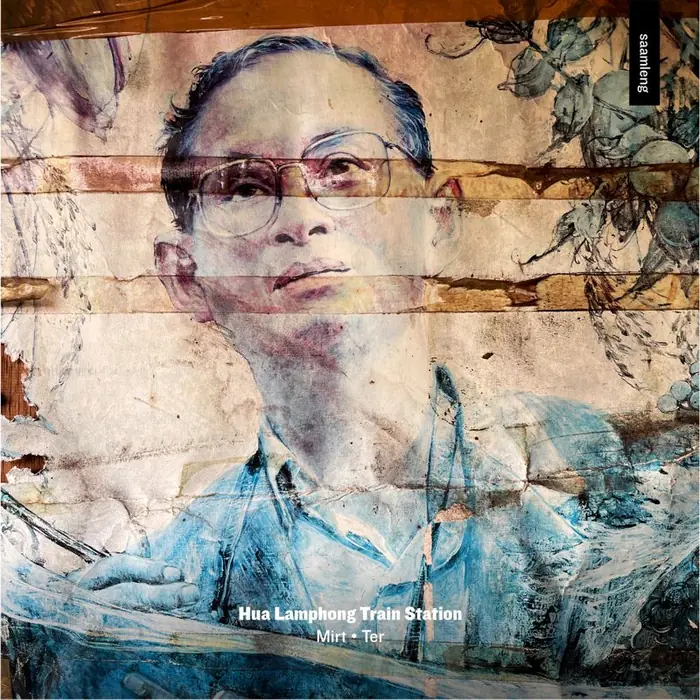
Hua Lamphong Train Station
Mirt • Ter
We have loved this short recording from Hua Lamphong Train Station in Bangkok ever since we captured it at the back of the station complex. It’s hard to say why. Perhaps it’s because it evokes so much of the soundscape of this city so dear to us. We tried to include it in one of our albums, but it didn’t quite fit. So let it stand on its own.
01.Hua Lamphong Train Station

saamlengD38
Exceptionally Quiet Wisents
Mirt
I spent a few summer days in Teremiski, mainly to relax, but also with a specific plan in mind. It’s no surprise that my intention was to record wisents, but like most of my plans, this one was doomed to failure. I knew immediately that it wasn’t the best time of the year and that five days in the forest wouldn’t be enough to find a suitable location for my drop rig and record at least two or three nights of usable material. In any case, I only had those few free days, so I hurried on, hoping that against all odds, I’d succeed. After all, everything is a matter of chance, and for me, it would be a huge boost if I succeeded. I felt I had nothing to lose. I had my hopes up, but as usual, a bit of a “deeper” listening experience with a touch of surprise was enough to satisfy me. After all, I knew wisents were surprisingly quiet for their size. I wasn’t expecting a spectacular, reverberating roar, but rather some ASMR-style recordings – rustling grass, breaking branches, I’m not sure, just something like that.
As I suspected, I returned with nothing... or almost nothing. I had a few random recordings on my SD cards to review – a few taken during the day near the village and one longer one, taken at night. The last one contained a few intriguing, but faint, and mostly distant sounds (9), until dawn, when the silence was broken by birdsong (1). I had a choice of two locations to set up my drop rig, but I chose the worse one (as it turned out, thanks to a camera trap placed in the second location). I quickly decided to archive all the recordings and forgot about them. In the end, it was a calculated risk, so I didn’t worry too much. The recorded material ended up in the purgatory I call my archive. Nevertheless, a few pleasant, yet quite personal moments of bliss were captured – it’s been a while since I’ve just sat in the middle of a field somewhere in Poland for hours, listening to the stridulation of insects and the chirping of small birds living in the grass.
It so happened that on a cold, grey evening two months later, I stumbled upon these abandoned recordings, which evoked memories of a hot, fragrant late summer and a forest quieting with the approaching autumn. Suddenly, they seemed to me to form a coherent narrative. I fully understood what I had been subconsciously absorbing during those few days in the forest. I examined the collected sounds with greater understanding, and there they were. The story of a completely ordinary day in Teremiski, full of silence, already fragrant with autumn. Expect near-silence, full of intricate, lace-like details and echoes. Inconspicuous, complex, demanding, yet beautiful in an unobvious way.
The truth is, I met the wisents. It was just before 4 a.m., a cold morning heralding autumn and winter. They were quieter than the silence around me. Like statues, a bit otherworldly. I stared at them for a few minutes, hoping to capture that silence. But a moment later, the stillness was shattered by cars, from which several people emerged with cameras and long telephoto lenses. I must admit, it was a cold shower for me – I didn’t want to be another trophy hunter with a microphone. It wasn’t my idea at all.
From the beginning, I had been subconsciously focusing on the seemingly insignificant sound microcosm, and perhaps this moment of silence helped me understand it.
Just a few hours later, before noon, I sat mesmerised by the intense sound of insects circling the same buckwheat where I’d observed the wisents (2, 3). Monotonous and restless, full of fleeting details. Gradually, these small creatures seemed to erase and replace the majestic black silhouettes in my memory, weaving their dense textures.
Sometimes in the dark, their presence is revealed by the flutter of small wings, audible only when they’re a few centimetres from the microphone diaphragm or by high-pitched echolocation pulses at the edge of human hearing. It was hard to miss the bats swarming under the roof (7), but I only noticed those flitting across the fields (8) after careful listening to the recordings.
Now I think about my first night in Teremiski, when I heard the distant call of a corncrake in the middle of the night (8), accompanied by those long, lush reverberations. It seems that everything comes down to the slowly evolving textures. Porous, rough, sometimes, but rarely, smooth as silk. Sounds are like shapeshifters, easily changing meaning in the human ear. Despite their undeniable presence, they appear and disappear in our minds. The field changes shape with the sounds, evoking new associations with each listening, and only when we focus. Information, pure data, a pure signal (whatever you call it), is extremely difficult to capture, entangled with personal feelings or simply inter-species limitations. But maybe that doesn’t matter. In the end, this is just a collection of my personal audio notes.
01.Dawn in the Białowieża Forest
02.Morning in the Buckwheat Where I Saw Wisents
03.The Same Buckwheat at Noon
04.In the Pasture Where I Didn’t Meet Any Wisents But I Was Caught by the Rain
05.After the Heavy Rain
06.Corncrakes in the Morning
07.Bats under the Rooftop
08.Corncrakes, Bats and the Cat
09.Night in the Białowieża Forest
saamlengD39
The Return of Rutting Deer
Mirt
Let’s dive deep into the archives! More than ten years ago, I recorded the sounds of deer rut in the Odra floodplains between the villages of Siekierki and Stara Rudnica. It was a rather cold September. I usually started recording early in the evening. Some of the deer were probably spending all day in the dense reed beds – when I left the village, they would begin vocalising, while others descending from the woods responded from across the road that meandered along the river, a clear asphalt boundary between forest and floodplain. A couple of hours later, the night air would turn humid, sometimes with a bit of rain. I spent a lot of time in the reeds, just listening with the volume in my headphones set quite high. Afraid I’d capture my own movement, I used long cables to increase the distance from the microphone – but this also enhanced the extraordinary feeling of listening to every amplified detail, each tiny movement among the reeds. In the darkness, sounds seemed detached from vision, exaggerated even more.
One of those recordings ended up on the digital album “Rutting Ground in the Odra Floodplains” and later on the compilation CD “Deer Rut Time”. If you’ve ever wondered what else I managed to record during those chilling nights, today you have the opportunity to listen to fifty additional minutes.
One of those recordings ended up on the digital album “Rutting Ground in the Odra Floodplains” and later on the compilation CD “Deer Rut Time”. If you’ve ever wondered what else I managed to record during those chilling nights, today you have the opportunity to listen to fifty additional minutes.
01.The Return of Rutting Deer I
02.The Return of Rutting Deer II
03.The Return of Rutting Deer III
04.The Return of Rutting Deer IV
05.The Return of Rutting Deer V
saamlengD40
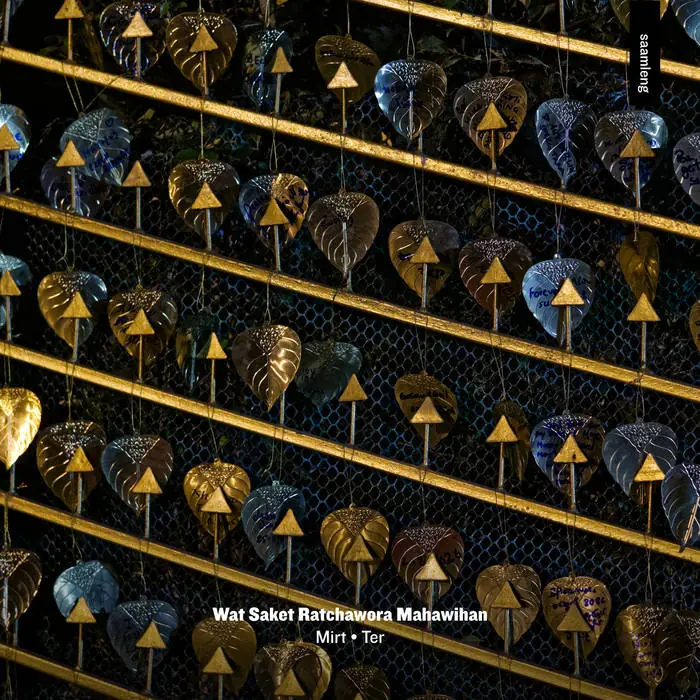
Temple Soundscapes Series 09: Wat Saket Ratchawora Mahawihan
Mirt • Ter
This is the ninth instalment in a series of soundscape recordings from Buddhist temples in Thailand.
Usually, we choose less popular, provincial sites for recordings. However, we knew that sooner or later we’d press RECORD at Wat Saket. The temple, also called the Golden Mount, is one of Bangkok’s more popular temples. It gained its current form in the 1940s, when the small hill located outside the city clearly towered over surrounding buildings. Today’s Bangkok has absorbed the temple, but it remains a distinctive and heavily visited place.
Few temples we’ve encountered leave such a distinct sonic trace beyond their walls as Wat Saket does. Numerous votive bells and an even greater number of small chimes can be heard in the evening from all the streets surrounding the complex. The bells, which only ring sporadically at other temples, at Wat Saket are struck by pilgrims constantly and ring almost without pause. Their dissonant tones are complemented by the low sub-bass sound of a large gong. Along with the crowd’s murmur, these sounds effectively dominate over the powerful drone of the city surrounding the temple.
01.Wat Saket Ratchawora Mahawihan
saamlengD41
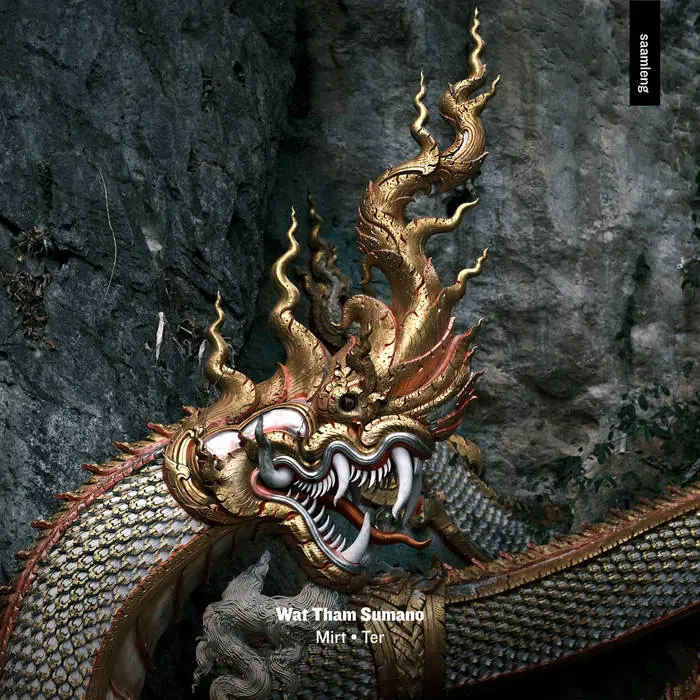
Temple Soundscapes Series 10: Wat Tham Sumano
Mirt • Ter
This is the tenth instalment in a series of soundscape recordings from Buddhist temples in Thailand.
Founded in 1988, Wat Tham Sumano is a temple and meditation centre organised around a unique large limestone cave. It is located in the far south of Thailand in Phatthalung Province. Numerous statues of the Buddha are placed in the successive chambers of the cave. Open on two sides, the cave provides good ventilation and a pleasant coolness inside. It differs from other similar sites in Thailand in that there are virtually no bats to be heard or seen. The floor is laid with tiles. The cave’s ceiling is dotted with funnels of various sizes, collecting water. The temple is occupied only by a few individual worshippers and the nuns who take care of the site. I doubt larger groups ever visit.
Founded in 1988, Wat Tham Sumano is a temple and meditation centre organised around a unique large limestone cave. It is located in the far south of Thailand in Phatthalung Province. Numerous statues of the Buddha are placed in the successive chambers of the cave. Open on two sides, the cave provides good ventilation and a pleasant coolness inside. It differs from other similar sites in Thailand in that there are virtually no bats to be heard or seen. The floor is laid with tiles. The cave’s ceiling is dotted with funnels of various sizes, collecting water. The temple is occupied only by a few individual worshippers and the nuns who take care of the site. I doubt larger groups ever visit.
01.Wat Tham Sumano
saamlengD42
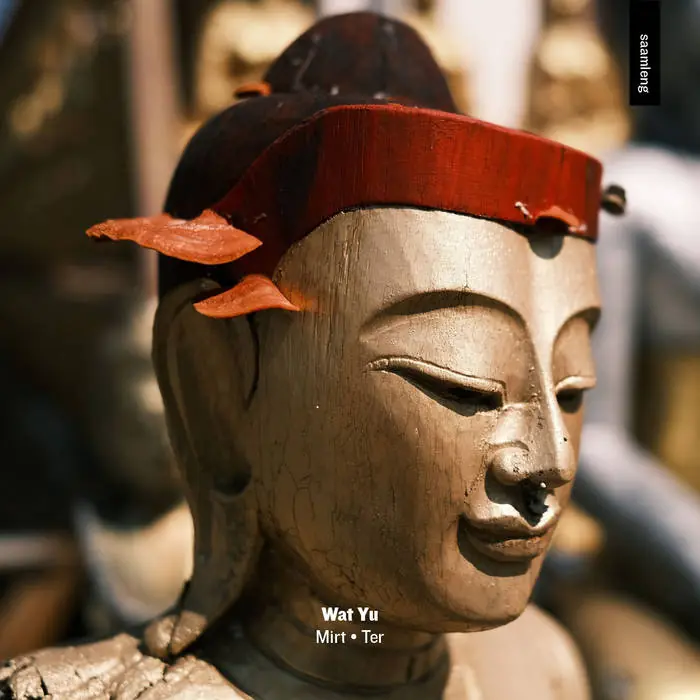
Temple Soundscapes Series 11: Wat Yu
Mirt • Ter
This is the eleventh instalment in a series of soundscape recordings from Buddhist temples in Thailand.
Wat Yu is a medium-sized temple located in Nan Province, in Tha Wang Pha District. There you’ll find a northern Lanna-style chedi, a small Ho Rang bell tower and fine wooden Buddha statues weathered by the passage of time, the elements and some fungi. It lies on the outskirts of the village in a valley, among rice fields surrounded by mountains. Browsing the internet, one can come across picturesque photographs taken when the crops are lush and vividly green, most likely captured by Thais visiting the nearby Wat Sri Mongkol, a vibrant temple complex that somewhat resembles an amusement park.
When we arrive at Wat Yu, however, the rice fields are dry. The temple, although well maintained, appears deserted. The sun stands high at its zenith, and almost everyone seems to be hiding from the heat. The sounds of birds blend with noises drifting in from the nearby village.
01.Wat Yu
saamlengD43
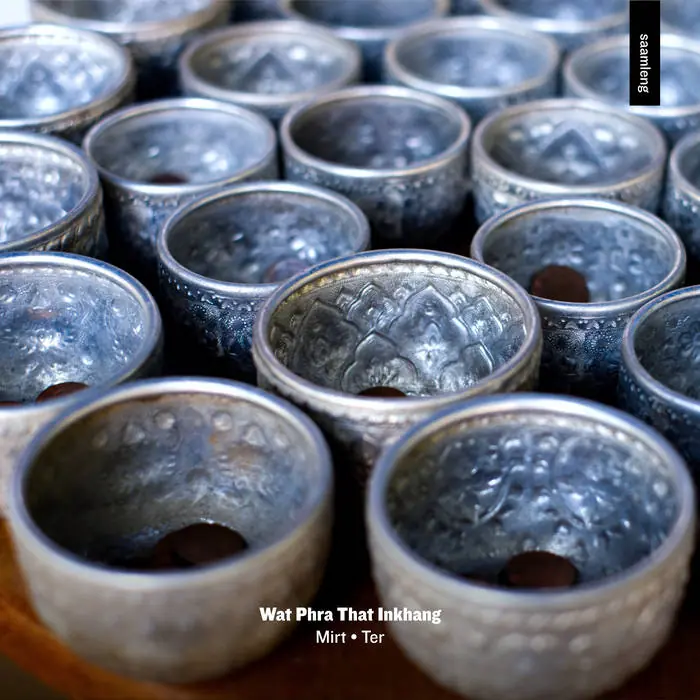
Temple Soundscapes Series 12: Wat Phra That Inkhang
Mirt • Ter
This is the twelfth instalment in a series of soundscape recordings from Buddhist temples in Thailand.
Wat Phra That Inkhang is a rather new temple and local attraction located in the mountains near the city of Phrae. The temple takes the form of a park situated on a mountainside, with narrow paths winding between trees and connecting terraces with successive representations of the Buddha or monks accompanied by smaller animal statues – some of them quite large. In various places you can also find typical bells and gongs. The main attraction seems to be a replica of Myanmar’s Kyaiktiyo Golden Rock.
We arrived at the temple in the morning, before the increasingly numerous groups of worshippers began to arrive. Perhaps because of this, along with the moderate temperature and the view of the surrounding forest, the temple struck us as an exceptionally peaceful and welcoming place. It is possible that we liked the place so much partly because of our weakness for this type of temple, where unusual objects are hidden in various corners. Speaking of surprises, be careful of the loud bell sounds while listening!
01.Wat Phra That Inkhang
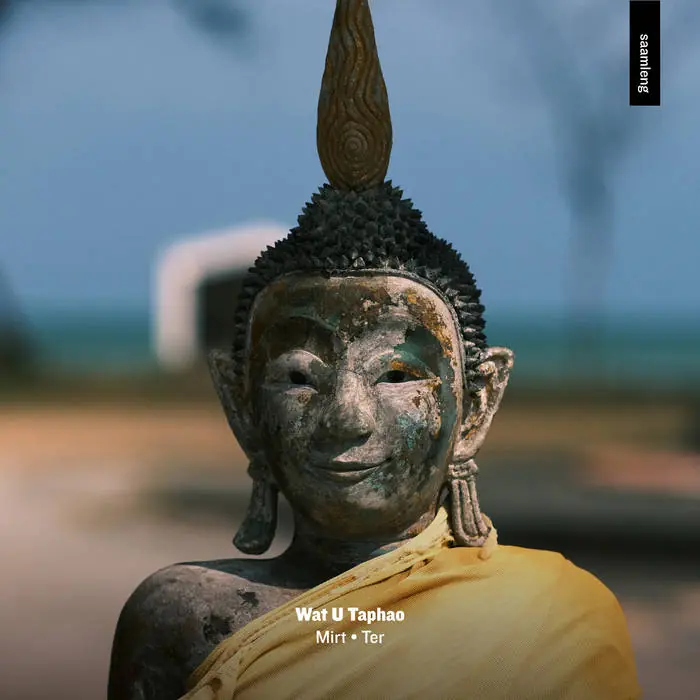
saamlengD44
Temple Soundscapes Series 13: Wat U Taphao
Mirt • Ter
Driving around the large lake that divides Phatthalung and Songkhla provinces and separates the mainland from the wide sandbar along the Gulf of Thailand, we arrived at Wat U Taphao (Wat Kao) essentially by accident. We started from Phatthalung city, among fields and the kilometres-long wetlands of Thale Noi. We hoped to find a nice spot to record wetlands. Just when we lost hope for any recording that day, we thought that the sea was close enough to make it the final destination of our journey, before turning back. The landscape changed drastically as we reached the temple located in a string of coastal villages. The large lake looked almost like a sea, but despite gusts of wind it was relatively calm. On the other hand, the sea was rough and waves were crashing violently with a bass rumble.
Wat U Taphao is a typical local temple, with a fairly original reliquary shrine lending it individual character. But there’s something more significant. It stands almost on the rocky beach, and barely a few dozen metres away a view of the sea unfolds. As we arrived, grey choppy waters blended smoothly into a sky of the same colour, virtually nothing broke this monotony. The steady, strong wind seemed not to let up even for a moment. Two, maybe three workers took shelter in the shade from the gusts and from the sun, which burned imperceptibly in these conditions.
We mounted the microphone. With difficulty we found a spot where the wind didn’t cause clipping. Only the high tones of birds’ voices in the tree canopy above us pierced through the noise. Despite the chaotic, constant flow of air and churning sea water, there was an incredible constancy and unfathomable stillness in this sound and the view.
01.Wat U Taphao
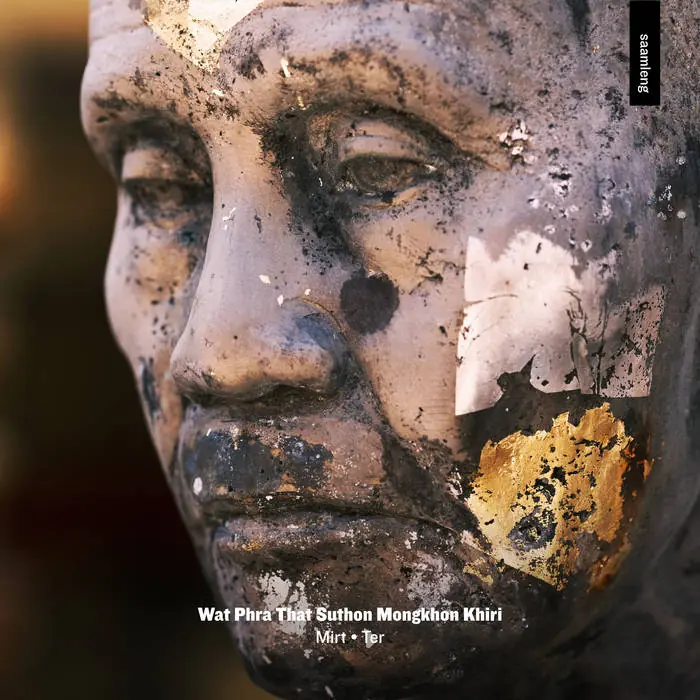
saamlengD45
Temple Soundscapes Series 14: Wat Phra That Suthon Mongkhon Khiri
Mirt • Ter
While in Phrae, looking at the ever-changing list of sites left to visit in the area, each evening after coming back to the hotel we extended our stay by another day. Just another, and another... The roads we travelled and the maps we studied revealed more and more obligatory stops.
Wat Phra That Suthon Mongkhon Khiri had to wait until the end of our stay for its turn. Its position on our list wasn’t threatened. We knew we needed to visit it and in the worst case, we’d stop there on the way back to Lampang. This is one of those temples where there seems to be absolutely everything you expect and a few additional unexpected things besides. The extensive grounds beyond the temple itself house the Monument to the Battle of Romklao. Already when parking the car, it’s impossible to miss the spectacular statue of a Hatsadiling, and a gigantic reclining Buddha towering over the main temple area. Despite its considerable size, the Monument to the Battle of Romklao, located on the right side, at the Buddha’s feet gets almost lost from view. The site gives the impression of being deserted. In the large parking lot, besides our car, there was just one local pickup.
After climbing up several steps, and finding the right entrance, the temple hiding behind the Buddha revealed further surprising architectural details, like a unique chedi, resembling one from Wat Phongsunan in the old town of Phrae, but entirely in gold. Despite the absence of people, it gave the impression that we had stumbled completely by chance into a rare moment of calm and stillness. I had in mind an internet comment that the temple looks abandoned; on the other hand, it’s one of the important places of worship in Phrae, located on the city’s outskirts and easily accessible. All of this created an impression of strange suspension.
We set up the microphone in the main courtyard surrounded by a gallery decorated with numerous Buddha statues and paintings, typical of larger temples. Over the next half hour, a light breeze sometimes rang the chimes hanging on the edge of the roof of the main building and only a few individual worshippers appeared. Birds seemed to be the main guests of the building.
01.Wat Phra That Suthon Mongkhon Khiri

saamlengD46
Temple Soundscapes Series 15: Wat Khao Hor
Mirt • Ter
Southern Thailand is a popular destination among foreign tourists, but they were nowhere to be found in Phatthalung. In reality, crowds stick to the islands and only a few places on the long peninsula separating the Gulf of Thailand from the Andaman Sea. When we did encounter visitors at the province’s temples, they were Thais, occasionally Malaysians. Wat Khao Hor seems to be a popular destination, though we’d clearly arrived late. The last temple stalls were closing, and a crew of sun-weathered men loaded the remnants of an outdoor stage onto a battered truck.
Wat Khao Hor appears as a jumble of mismatched structures – newer and older buildings, caves, a viewpoint with a somewhat strange Buddha statue, everything scattered across the slope of a small hill.
This architectural chaos hints at the temple’s long history, likely founded by Brahmins in the 9th century. While wandering around the temple’s narrow paths and stairs, we stumbled upon an unusual feature – a worn-out pool for herbal baths, tied to beliefs in their healing and magical powers. Bathing for seven days and seven nights supposedly grants immortality. But there is more. The temple’s caves serve a different purpose: consecrating amulets, popular in Thailand, such as the famous Jatukham-Ramathep.
As the temple emptied, we climbed above the pool to find a small wooden platform with a tin roof and a nice view of the fields around the temple. A branch scraped persistently against the metal tiles, pushed by the sea wind from the Gulf of Thailand. Finding no better location, we positioned the microphone to capture this solitary sound. Somehow it felt perfectly suited to a place where immortality can be won.
01.Wat Khao Hor
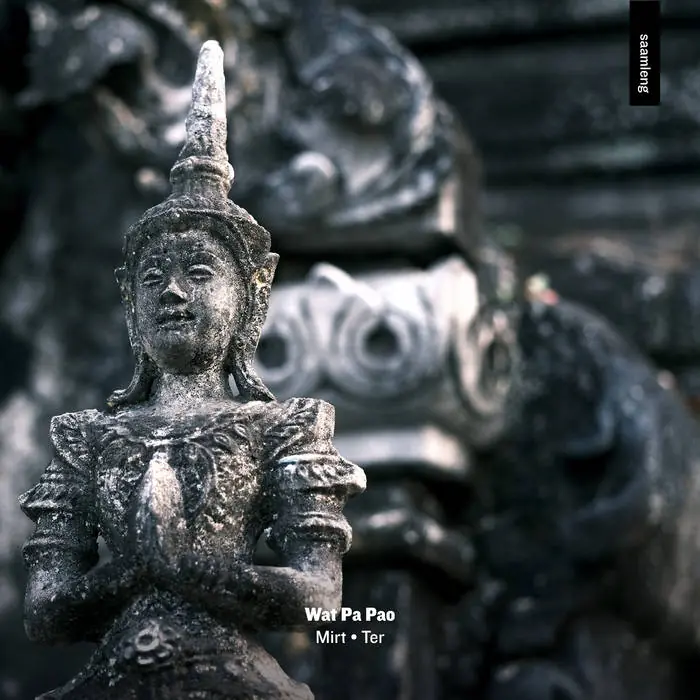
saamlengD47
Temple Soundscapes Series 16: Wat Pa Pao
Mirt • Ter
Wat Pa Pao is located on the outskirts of Chiang Mai old town. Hidden beneath shops and residential houses placed along the busy road circling the city walls, it is a surprisingly peaceful place. Somehow the crowds visiting Chiang Mai temples usually skip this one.
Wat Pa Pao was established in 1883 and it is the first temple built in Chiang Mai to serve the Shan community, many of whom had migrated from northeastern Burma; thus the temple is built in the Burmese-Shan architectural style. At least the old part, because Wat Pa Pao is a mix of different buildings made throughout its history. A rather ugly modern pavilion and school stand alongside a richly decorated old teak assembly hall and several stone structures, including the characteristic Burmese-style bell-shaped chedi. Surprisingly, they haven’t been covered with further layers of new paint yet.
There are around 300 wats in Chiang Mai. Some are really stunning, yet also extremely crowded, losing one important factor: the peace that usually distinguishes temples from the surrounding bustling cities. To make matters worse, in large noisy towns like Chiang Mai, it’s hard to find a place that isn’t overpowered by the urban soundscape and its main ingredient – the din of traffic-choked streets.
Sometimes during our visits to Chiang Mai, after a day of wandering around, we subconsciously escaped to Wat Pa Pao – a kind of oasis for us. Pa Pao means “forest of Pao trees”. Years ago, the temple was surrounded by them. The forest is long gone nowadays, but some kind of spirit, difficult to grasp now, remains within the temple walls.
This time we arrived in early evening, just before closing. There were no more children at school, just a couple of locals taking care of the temple and two monks from abroad whispering jokes and taking photos with old chinthe figures guarding the chedi.
This soundscape recording may seem boring – you might say there’s no sense of the tranquility and peacefulness of Buddhist temples at all. City sounds still leak into these grounds, leaving the temple itself dead silent: no gongs, chimes or bells, no prayers. But perhaps it is just hard to grasp, like this Pao forest spirit. It lives in small talk, voices of evening birds, and even in this omnipresent echo of the bustling city.
01.Wat Pa Pao
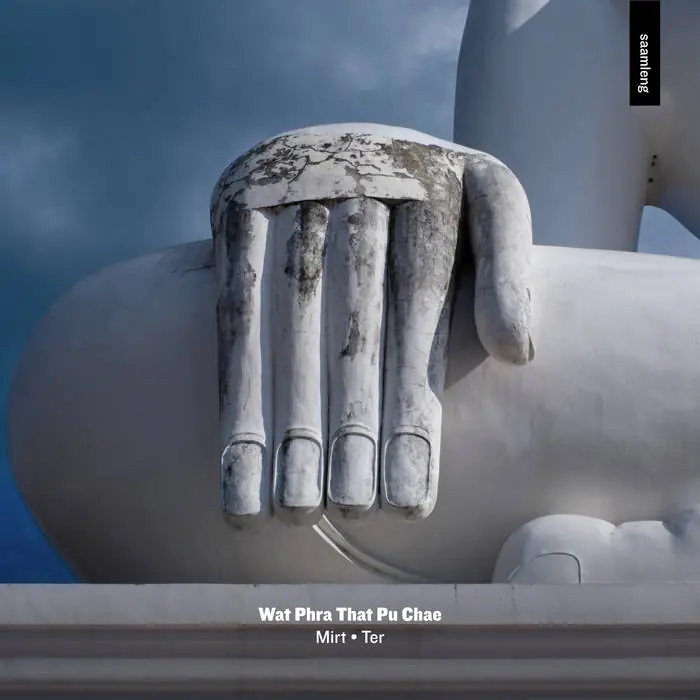
saamlengD48
Temple Soundscapes Series 17: Wat Phra That Pu Chae
Mirt • Ter
When we arrive at Wat Phra That Pu Chae, perched on a hilltop, it appears that the cleanup after some kind of public event is still underway. It is difficult to tell what exactly took place earlier. We can only assume it was connected with Lunar New Year celebrations. The mandarins handed to us by an elderly woman shortly after our arrival seem to confirm this guess, as it is a common New Year custom influenced by Chinese traditions.
The bustle of local devotees sweeping and washing the floors is accompanied by the monotonous voice of a monk broadcast through the temple’s PA system. Gradually, the cleaning comes to an end. Some people begin leaving the temple grounds, exchanging friendly farewells with those still staying behind to work. Yet despite the activity, a sense of tranquility prevails. White is hardly an unusual colour in Thai temples, yet here it seems unusually abundant; the place feels pure, almost sterile. The atmosphere seems to arise from something more than the ongoing cleanup and the signs of recent renovation alone.
The wat’s name is said to derive from a local legend. In one of his previous lives, when the Bodhisattva was born as a golden deer, he was relentlessly pursued by a hunter. Upon reaching this hill, he was wounded and began suffering from urinary retention, a condition referred to in the local dialect as “puat chae”. After suffering for three days, he died on this very spot. This is the origin of the name Pu Chae. An unexpectedly prosaic explanation for the temple’s name. After attaining enlightenment, the Buddha is said to have returned to this place. Recognising the hill as the site of his former death, he recounted the story to Ānanda, who asked that it be preserved as a place of veneration.
The wat lies near the village of Ban Bun Roeng, overlooking the Rong Kwang valley. At the centre of the temple, behind the viharn (the main assembly hall), stands a medium-sized, square-based chedi clad in gold sheeting. It appears to be a relatively recent structure inspired by the form of the chedi at Wat Phra That Cho Hae, a style characteristic of the Phrae region and rooted in the Lan Na architectural tradition. According to local belief, it enshrines a relic from the Buddha’s right ankle.
We are unable to determine the temple’s actual age. Freshly renovated, it could easily pass for a contemporary structure, although most sources vaguely state that it was founded in ancient times and repeatedly restored by successive rulers of the Kingdom of Phrae. It is not the first temple we have encountered whose age is difficult to believe because of constant renovation and expansion.
The complex is dominated by a giant white Buddha statue standing some 200 metres from the main temple grounds. It is identified as Phra Puttha Rup Phraputthachao Chana Mar, the Buddha Victorious over Mara (the force opposing enlightenment and the embodiment of temptation). It was this figure that first guided us to the site. Standing beneath the enormous statue, we are unable to take in its full scale at once; instead, our attention drifts towards its rounded white surfaces, covered with abstract shadows cast by the setting sun. It is already early evening, yet the heat remains scorching. Beyond the temple walls, the stillness is striking. The surrounding countryside produces a faint, indistinct murmur, yet it recedes so completely into the background that it is easy to forget it is there at all.
01.Wat Phra That Pu Chae
saamlengD49
Temple Soundscapes Series 18: Wat Ou Sai Kham
Mirt • Ter
Wat Ou Sai Kham lies on a side street in Chiang Mai, just a few steps from the walls of the Old City. Although the temple is believed to be more than three centuries old, it was rebuilt and officially registered in 1841 after a period of abandonment. An earlier chedi, possibly dating from the sixteenth century, already stood on the site and was later enclosed within the larger structure visible today. The viharn and ubosot were built in the 1880s. The grounds also include a ho trai, a more than 150-year-old wooden scripture library constructed in the Lan Na style characteristic of northern Thailand. The temple’s main attraction is its collection of jade Buddha images, foremost among them Phra Singh Yok.
What draws us to Wat Ou Sai Kham is not its collection of jade Buddha images but the sound of solitary wind-stirred chimes. We know this sound well, having passed the temple dozens of times during our stays in the city. Despite its attractions, the place tends to fall outside the interests of most tourists, making it a fairly good spot to find a shaded corner and a moment of relief from the urban clamour.
In central Chiang Mai, despite the dozens of temples, it is difficult for us to decide which ones to record. The city is the first stop for many people drawn to Thai sacred architecture. Yet what remains visually compelling often fades sonically, washed over by waves of metropolitan noise. Even with some experience behind us, we repeatedly find ourselves realising just how dominant this factor is within the soundscapes of Chiang Mai’s temples. So we return to Wat Ou Sai Kham believing it to be a somewhat calmer place, hopeful that this time we might capture something more distinctive.
The dense air, heated by the afternoon sun, is stirred only occasionally by isolated gusts of wind. In the headphones, the dominant sounds are the drone of air conditioners from nearby buildings and the noise of cars passing along the adjacent lane. The temple is nearly empty; only now and then does a monk pass by, or a staff member emerge briefly from an air-conditioned room, driven outside by nothing more than a nicotine habit. Sonically, the temple seems almost transparent against the backdrop of the city. Hemmed in by hotels on every side, it is barely perceptible as a distinct space.
It turns out that the sparse ringing of chimes had been deceptive. The minutes pass after we press RECORD. We know perfectly well that nothing extraordinary will happen, nothing will catch us off guard, nothing dazzling will reach our ears. And yet, with each passing minute, we grow more certain that this seemingly unremarkable recording is something our collection genuinely needs. Most of the temples we pass along the way vanish beneath a surrounding soundscape dominated by the roar of engines. Many present an almost uniform sonic environment, nearly indistinguishable from their surroundings.
Still, from time to time, the lonely ringing of a chime suspended from the roof of the viharn reminds us of Wat Ou Sai Kham. Ultimately, bells are powerful sound markers.
01.Wat Ou Sai Kham
saamlengD50
Temple Soundscapes Series 19: Wat Khuha Sawan
Mirt • Ter
Wat Khuha Sawan is one of the temples we visited in Phatthalung – a rather quiet town largely bypassed by tourists. During our several-day stay, we returned to the temple a number of times before finally deciding to settle there for a longer recording session. For many reasons, the temple seemed particularly intriguing to us. Situated at the foot of Khao Khuha Sawan hill, it occupies a fairly extensive area filled with greenery and criss-crossed by numerous pathways forming a kind of labyrinth. As if that were not enough, beyond the picturesque temple buildings, the complex also includes caves and a viewpoint located higher up the hill. On the way there, we passed an older, apparently abandoned terrace with a small pavilion and an old bell tower. Wat Khuha Sawan seems to conceal many unusual and varied corners – from places with a dark, almost Gothic atmosphere, like the bell tower hidden in the shade of trees, to more surreal sights, such as a rather comical Buddha statue that looked as though it had been moulded from half-melted wax.
The temple was founded during the Ayutthaya period (14th–18th century), although the site of worship itself is far older. Long before the formal temple was established, the caves themselves already functioned as places of worship and meditation. Clay votive tablets from the Srivijaya period have been discovered here, indicating religious use already between the 8th and 10th centuries. The caves also preserve signatures and inscriptions left by several members of the Thai royal family, among them King Rama V. Wat Khuha Sawan is also the only royal-grade temple in the province.
Despite all this, it was somewhat surprising that during our visits the temple’s most regular inhabitants seemed to be a small group of dogs taken in by the monks. They constantly wandered around the grounds, often stopping for naps beneath the trees. From time to time they would erupt into barking whenever one of the few visitors appeared. The arrival of macaques, however, caused the greatest stir. The monkeys inhabit the densely overgrown temple hill. Sitting on the steps near the entrance to the main cave, we listened to these squabbles flaring up and fading away, alongside the calls of birds and echoes of the evening city slowly falling silent.
At first, the cave itself seemed like an interesting place for recording, but eventually it was overshadowed by other similar sites we discovered while wandering through the province. Of equal importance was the fact that, although well maintained and brightly lit, it was also exceptionally humid and stifling, more reminiscent of a sauna than a cave. Far more appealing to us was the gentle movement of the evening air outside; the ordinary, everyday soundscape there was also rich in detail and far more interesting.
In many ways, Wat Khuha Sawan feels almost like the archetype of the ideal temple in the centre of a provincial town – a place that seems to slow time the moment you pass through its gate. The walls of such temples appear to possess a remarkable power to detach the place from the rest of the city. The rocky hill face, covered in dense vegetation, does something subtle yet extraordinary to the sound itself: the city, though physically close, seems to drift far away.
01.Wat Tham Khuha Sawan
saamlengD51
Temple Soundscapes Series 20: Wat Thung Khong
Mirt • Ter
We spent a long time searching for Wat Thung Khong. A few years ago, we came across a short video showing a group of tourists striking an enormous gong. Although the vague description suggested a temple located somewhere in Nan Province, all subsequent attempts to determine its exact location and name proved unsuccessful. We searched through online maps and photographs, yet we were unable to identify the temple we were looking for.
In the end, we arrived at Wat Thung Khong entirely by accident while visiting another temple nearby, similarly situated in the valley of the Yang River. The name Wat Thung Khong is derived from the name of the village, Ban Thung Khong, which can be loosely translated as “the gong field”. The presence of a large gong in the temple may therefore be connected to the village’s name. However, this is only a speculative guess. The etymology of the village’s name remains a mystery to us.
The word “khong” immediately catches our attention as we scroll through the map. The temple itself is a complex typical of rural areas, yet the great gong clearly stands out as its main attraction. Its presence was probably intended to draw local worshippers and Thai tourists visiting the nearby Wat Sri Mongkol, a place that feels like a curious mixture of a wooden, Lan Na-style temple and an amusement park. The giant gong of Wat Thung Khong fits perfectly within that atmosphere. At the same time, however, the temple itself is a far more modest place, devoid of other attractions.
The gong stands to the left of the entrance beneath a small roofed shelter. Beside it hang two other gongs which, in most temples, would themselves be considered large, yet here they are completely overshadowed by the scale of the main instrument. We stand before this treasure we have searched for over so many years, genuinely surprised. The temple is entirely empty; if there is a solitary monk hiding somewhere on the grounds, he pays no attention to us at all.
The enormous mallet lying in front of the gong seems to weigh around five kilograms, though it still appears too small to fully awaken the instrument. Following the advice of an exceptionally friendly monk we met years earlier in another temple, I strike the gong three times – a gesture said to bring good fortune. The sound is extraordinary and unusual. The gong is so large that its fundamental tone and many of its overtones fall below the range of human hearing. It rattles and resonates, creating its own unique microcosm of timbres.
Eventually, the gong falls silent, and we sit down with the intention of recording a longer passage of the whole soundscape. The temple remains deserted, and the chances that the gong will sound again that day seem minimal. Mostly we hear the quiet stirrings of the countryside. Even the nearby asphalt road appears to be used only occasionally.
After some time listening, we begin to notice the clatter of wood, accompanied by the distant noise of a saw. We focus on the calls of birds from the surrounding fields, but gradually, the rattling sound seems to draw closer. Remaining within a narrow strip of shade on the steps of the small viharn, we finally see the source of the mysterious sounds just after the recorder passes the twenty-minute mark: an elderly, hunched man transporting a bundle of bamboo poles with the help of a walking frame that also serves as his support.
We stop the recording to help him. Instantly, it pulls us out of our pleasant state of near-stupor. Even the satisfaction of finally finding the long-sought gong after years of searching begins to fade.
01.Thung Khong
02.Wat Thung Khong
saamlengD52
Temple Soundscapes Series 21: Wat Kharuehabodi
Mirt • Ter
Wat Kharuehabodi stands on the same bank of the Chao Phraya River as the far better-known Wat Arun. To reach it, one must travel some four kilometres upstream beyond the Rama VIII Bridge, leaving behind the parts of Bangkok most heavily frequented by tourists. The route leads through a densely built-up older quarter of the city. However, we choose a different route: we arrive at the temple by crossing the river on a small, nearly empty ferry from the opposite bank. The modest pier where we disembark is, as so often in Bangkok, squeezed tightly between neighbouring buildings. We emerge through a narrow, shaded passageway. The moment we step out of it, we cannot shake the impression that we have entered a different city altogether – smaller, calmer, and somehow more intimate. Low residential buildings line the streets, and the lanes feel distinctly more provincial and welcoming. The city remains clearly audible, yet on this side of the river an unusual tranquility seems to prevail. Before we begin listening more carefully, we mistake it for silence, a perception created largely by contrast with the much noisier bank we had left only moments before.
A labyrinth of narrow streets and footpaths leads us from the pier to Wat Kharuehabodi. The temple stands directly beside the river, which here is bordered by a fenced embankment from which a succession of piers extends into the water. The temple was founded in 1824 by Phraya Ratchamontri Borirak (Phu), a treasury official close to King Rama III. After being granted another residence by the king, he donated his own house and its grounds for the establishment of a monastery, which the king accepted as a royal temple.
The temple’s principal image, and the main reason local devotees come here, is Phra Saek Kham (“the Golden One That Slipped In”), a seated bronze Buddha in the earth-touching gesture. According to temple tradition, the image dates back to Queen Camadevi of Hariphunchai, the Mon kingdom that preceded Lan Na by several centuries. Art historians, however, attribute it stylistically to the late Chiang Saen tradition, most likely dating it to the sixteenth century.
In front of the ordination hall stands a bell-shaped chedi, a form derived from late Ayutthaya and favoured in the architecture of Rama III’s reign. Closer to the river stands the 21-metre-high Phra Borommathat Chedi, said to enshrine relics of the Buddha.
The grounds are relatively spacious, especially if one includes the adjacent temple school. We wander around searching for the best place to set up the recorder, trying to anticipate every possible scenario. There are few worshippers in sight. The occasional visitors are mostly women, some of whom strike temple bells (rakhang) hanging in a row in front of the ordination hall, though they seem to do so almost in passing. Perhaps the temple grounds simply serve as a convenient shortcut on their daily route.
A row of gongs and bells becomes one piece of our puzzle, even if nobody happens to strike them during the recording. The Chao Phraya is another; it was, after all, the riverbank itself that drew us to Wat Kharuehabodi. The school is the third and seems destined to become the dominant sound marker. In the end, we place the recorder at the edge of the temple grounds, beside the wall separating the school from the temple and relatively close to the river.
As in many places spared the influx of tourists and left largely to local visitors, it is difficult to sense the weight of the history associated with the site. Sheltering in the shade from the fierce midday sun, our attention is drawn instead to entirely ordinary details: the voices of children playing in the schoolyard, the deep rumble of long-tail boats passing along the river, a quiet procession of older students carrying musical instruments down to a waiting boat, the steady ticking of some unidentified mechanism lazily measuring the passing minutes... and the ever-present call of the Asian koel, a sound inseparable in our minds from warm tropical afternoons. Eventually, the temple itself announces its presence through the sound of rakhang struck one after another by another passing woman.
01.Wat Kharuehabodi
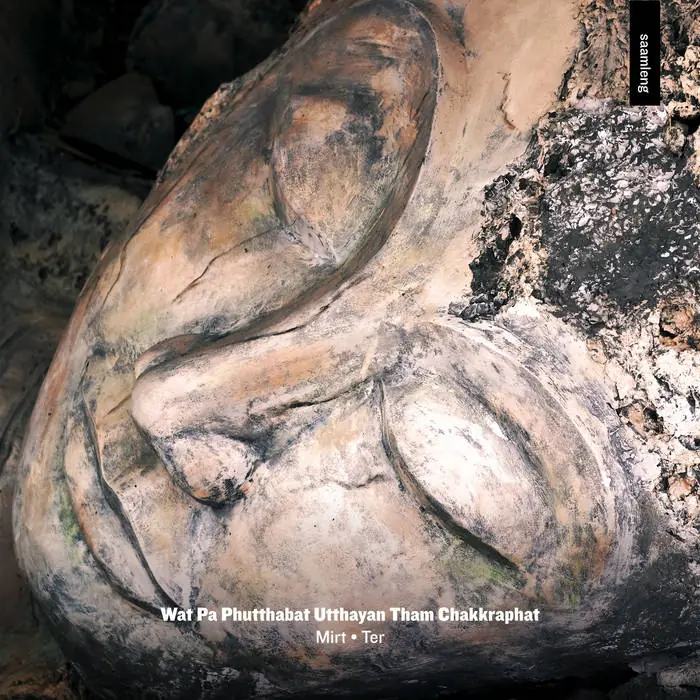
saamlengD53
Temple Soundscapes Series 22: Wat Pa Phutthabat Utthayan Tham Chakkraphat
Mirt • Ter
Heading north, our primary destination this time is Nan Province and the most remote corners of the country along the border with Laos. On the way we pass through Phrae, assuming we will spend a day there on our return journey. The plan, however, quickly proves misguided, and we leave Nan sooner than expected. We initially intend to stay in Phrae for only a day or two before continuing to Lampang, a place we remember fondly, especially for its excellent vegan eatery and lazy evenings spent on the old railway bridge. Yet after just a single day in Phrae, it becomes clear that our itinerary requires revision. In the end, we remain there for five days, devoting each of them to exploring temples scattered around the province.
At first we focus on the area east of the city. Eventually, however, we head south and then turn west. The route finally brings us to Wat Pa Phutthabat Utthayan Tham Chakkraphat, a forest temple hidden among the hills and woodlands.
The temple is associated with the practice of Vipassana meditation. From a distance, the eye is immediately drawn to a large Buddha image – Somdej Chakraphat Sakyamuni Sri Mongkol Prathan Phon – placed atop a hill overlooking the surrounding countryside. It is a typical meditation centre dedicated to the study and practice of the Dharma. The temple appears to be connected with the Thai Forest Tradition (Kammatthana Tradition).
At the foot of the hill, near the parking area, we notice several kuti – small individual dwellings used by monks and meditators – as well as a recently constructed mondop, which we assume houses relics of some kind. It immediately catches our attention because of its unusual architecture, resembling architecture more commonly associated with parts of Africa than with northern Thailand. Construction work seems to be ongoing throughout the complex. Although some of the buildings already show signs of age, the temple as a whole feels relatively new, an impression reinforced by the scarcity of information available about it.
A climb of several hundred steps awaits us. We had hoped to find more places like this in Nan Province, yet it is in Phrae that we finally encounter one. Somewhere online – we no longer remember exactly where – we had come across photographs that appeared fairly recent, showing nothing more than a bare hilltop crowned by the Buddha statue and accessible only by a steep and somewhat precarious trail. Now there is a new and much easier trail. The rustle of dry leaves accompanies our footsteps as we ascend the irregular staircase leading upward.
When we finally reach the summit, we find traces of the old path. It has been replaced by a new stairway and a substantial platform accommodating the Buddha image, a small chedi clad in gold-coloured metal sheeting, and a meditation hall located beneath the statue itself. Before reaching the upper level, we pass underneath the platform, moving through a space marked by colourful traces of melted candle wax and the somewhat crude, almost industrial framework supporting the structure above.
Fragments of scaffolding still surround the statue. We continue climbing, passing a man dressed entirely in white, seated in meditation. The hill rises conspicuously above the surrounding landscape. The air feels dense, veiling the distant view like a pale web. It is difficult to deny that the place seems perfectly suited to contemplation. We find ourselves imagining the monks who once climbed this hill before the construction of the present staircase. The new one is convenient, even if still physically demanding.
Before switching on the recorder, we become strangely reluctant to make any sound at all. Perhaps it is not reluctance but simply a desire to preserve the silence already present. Then a mobile phone begins ringing from the far side of the platform. The meditating man interrupts his practice to answer it.
We remain seated longer than necessary after the climb beneath the full midday sun. Eventually, we start recording. There is something deeply soothing in the distant murmur of villages, the calls of local birds, and, inevitably, the sounds of those ever-present wind chimes.
Whether one turns to the writings of Murray Schafer or the work of Steven Feld, bells seem impossible to escape. Perhaps it would be excessive to call it an obsession, yet they appear to exert a peculiar fascination on nearly everyone concerned with listening. In Thai temples their influence extends across an unusually broad spectrum – from large, dissonant rakhang to those ever-present wind chimes murmuring softly in the breeze.
01.Wat Pa Phutthabat Utthayan Tham Chakkraphat
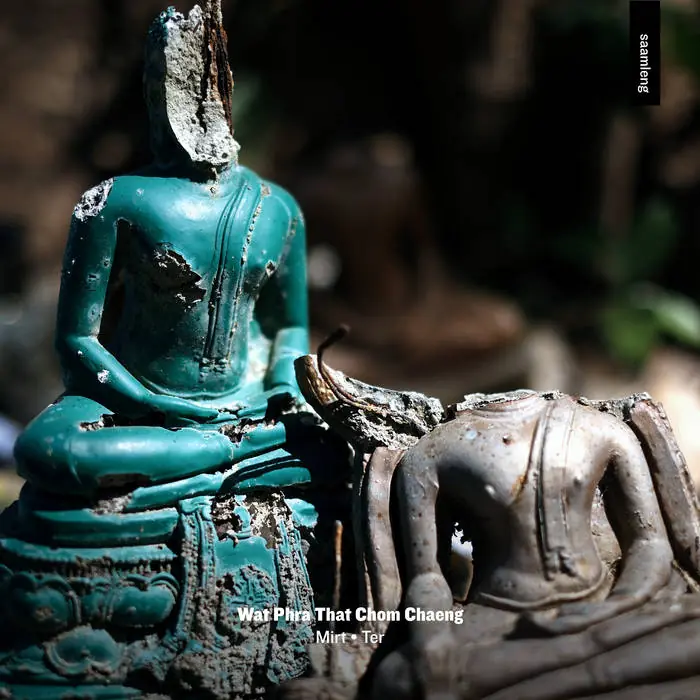
saamlengD54
Temple Soundscapes Series 23: Wat Phra That Chom Chaeng
Mirt • Ter
Wat Phra That Chom Chaeng stands about a kilometre beyond the better-known Wat Phra That Cho Hae, on a low hill outside Phrae. Chom Chaeng is a blend of Sukhothai and the local Wiang Kosai style. The twenty-nine-metre, gilded chedi is a slender cone of redented profile, rising without any bell element straight into a ringed spire. It is said to contain a hair relic of the Buddha together with a relic of his left hand. The temple was formerly called Phra That Chuan Chaeng, “the relic of the approaching dawn”, from the tradition that the Buddha reached the spot just before daybreak. The same tradition supplies a foundation date of 788 CE, which is legendary rather than documented.
Outside the walls enclosing the main temple grounds lies a large open clearing, deeply rutted by vehicle tracks and shaded by numerous trees. Along one side rests a sizeable reclining Buddha image. Smaller statues are scattered among the trees, some of them already crumbling into pieces. Everything appears remarkably chaotic. The temple is far removed from the gleaming, constantly renovated complexes so common elsewhere. In a curious way, this seems to reinforce its presumed age. Rather than a carefully planned composition, it resembles something that has accumulated gradually over decades, perhaps even centuries.
During our visit, the temple is filled with cheerful commotion. Monks and lay devotees move around the main chedi, busy with various maintenance tasks. From a nearby utility building come the voices of women calling to one another and the clatter of dishes. Cleaning and repair work have become one of the more familiar activities we find ourselves recording in Thai temples, as though we are perpetually arriving just after some important ceremony has ended.
Within the walls stand numerous smaller concrete sculptures in a vernacular style and painted in a charmingly naïve manner. There is Erawan, the three-headed elephant; an elderly couple portrayed in contemporary clothing – most likely donors or perhaps the parents of donors. There are also small shrines containing much older sacred images. Together, these elements heighten the impression of a place in constant motion and transformation.
It is possible that what we are witnessing are preparations for a renovation that will eventually restore the temple’s former splendour, while also stripping away some of its friendly and chaotic character. The viharn is closed due to damage to its roof. Nearby, old wooden architectural elements lie piled together, and an abandoned cart filled with broken roof tiles stands forgotten in the shade. Perhaps this is why the thought of renovation comes so naturally.
All of these old temples we visit continue to grow, mature, and change. They are never monuments frozen in time but living organisms. The Thai approach seems largely free of the nostalgia that so often shapes attitudes towards heritage in Europe. Newer often appears to be regarded as better – much to the despair of many European visitors.
Wat Phra That Chom Chaeng reminded us of a beehive, or perhaps an anthill. What we hear most clearly are not the buildings or the relics themselves, but the bonds that connect the people who pass through the temple, people whose lives we are allowed to overhear for only a brief moment.
01.Wat Phra That Chom Chaeng
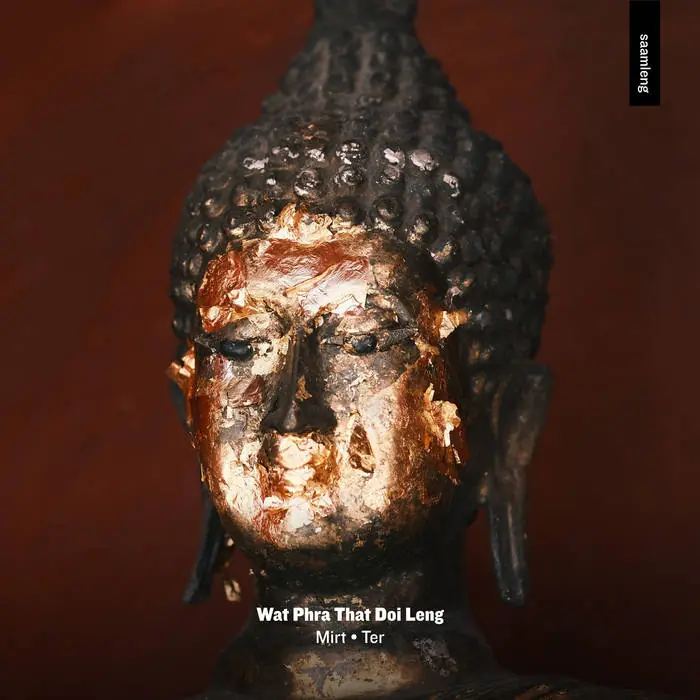
saamlengD55
Temple Soundscapes Series 24: Wat Phra That Doi Leng
Mirt • Ter
According to a local legend, the Buddha once visited the hills surrounding present-day Phrae. He is said to have first appeared at the site of what is now Wat Phra That Chom Chaeng, then at Wat Phra That Cho Hae, before continuing to the highest hill in the area. From there, he surveyed the surrounding countryside, declaring it an ideal place for the founding of a city. In the northern Thai dialect, the word “leng” means to observe, contemplate, or look upon attentively. The hill is said to have derived its name, Doi Leng, from this act of contemplation. According to local sources, until relatively recently the summit held little more than a small chedi. The present complex developed only towards the end of the twentieth century, with extensive construction and renovation taking place since the 1990s under the supervision of the abbot Phra Methi Wachiratham.
It is, we suspect, this very monk whom we encounter after a short climb up the stairs leading from the parking area to the summit. Open, self-assured, and speaking English with the cadence often heard in Thailand, he tells us about the temple’s ongoing construction projects and, somewhat unexpectedly, about his German visa, which he seems to regard as a notable distinction. The temple itself is relatively small, yet it occupies an important place in the religious landscape of Phrae. Thai sources suggest that it should not be viewed as an isolated monument but rather as part of a broader sacred landscape that also encompasses Wat Phra That Cho Hae and Wat Phra That Chom Chaeng. For many pilgrims visiting Wat Phra That Cho Hae, the ascent to Doi Leng forms an integral part of the journey.
Wat Phra That Doi Leng is undoubtedly one of the most scenic viewpoints in Phrae, with a view over the Yom River valley. After our brief conversation with the abbot, who soon excuses himself to attend to other local visitors, we settle on the spacious viewing terrace. Like many contemporary Thai temples, Wat Phra That Doi Leng skilfully intertwines faith, recreation, and commerce. We notice a sign listing various services available for purchase on the premises.
From loudspeakers scattered around the grounds flows a continuous stream of sentimental devotional music, alternating with the monotonous voice of what we assume is the abbot himself. At times it blends with the sound of wind-stirred chimes into something resembling a quintessential example of Thai temple muzak – equally kitschy and soothing. Doi Leng is our final stop of the day before returning to the city. It is late afternoon. A pleasant coolness lingers over the temple grounds. Rather than reviving us after the heat of the day, the mountain air seems to have the opposite effect. And so we sit quietly, contemplating the landscape in keeping with the spirit of the place.
01.Wat Phra That Doi Leng

saamlengD56
Temple Soundscapes Series 25: Wat Phra That Cho Hae
Mirt • Ter
It is immediately apparent that Wat Phra That Cho Hae is one of the most important temples in the Phrae region. At the foot of the hill occupied by the temple complex lies a spacious car park, partly lined with stalls selling all kinds of small goods. We arrive around noon. Only a handful of stalls are open, and most of the parking spaces are empty.
A flight of several dozen steps leads up to the temple. Within the walled enclosure stand the viharn and, behind it, the gilded chedi, built in the distinctive stepped style characteristic of this part of the north. The chedi is surrounded by an inner gallery, which separates it from the outer gallery by a narrow passage. This inner space is treated as especially sacred, something clearly indicated by the many shoe racks placed before the gateway leading inside. The sense of entering a more sacred realm is further enhanced by rows of rakhang (bells) lining the surrounding gallery. Once inside, the mingling sounds of the bells and the outside world contrast with the quiet that fills the enclosed passage. That tranquility, however, does not last for long.
We spend a few moments walking around the chedi in search of a suitable recording location. The temple is still quiet, with perhaps only one or two other visitors. Yet as soon as we set up our microphones in the middle of the gallery opposite the viharn, pilgrims begin arriving in ever greater numbers. Carrying small candles, they circle the chedi three times as part of the Wian Tian ritual, known in Buddhist tradition as pradaksina. Some stop to pray, while others livestream the ceremony to friends and relatives, holding a mobile phone in one hand and a candle in the other. The constantly changing procession includes elderly devotees, families with children, and young couples.
The formal, ceremonial atmosphere of Wat Phra That Cho Hae contrasts with the more worldly bustle of Wat Phra That Chom Chaeng and the peaceful seclusion of Wat Phra That Doi Leng, recordings of which you can also hear. All three temples are linked by the legend of Phra Chao Liap Lok (“The Buddha Circumnavigates the World”), in which the Buddha journeys through Kosai (the ancient name of Phrae) leaving behind sacred traces that later become reliquaries. The place where the Buddha stopped on Thachakkha Hill and presented a strand of his hair to the Lawa leader Khun Lua Ai Kom is today occupied by Wat Phra That Cho Hae.
Despite all the gravity and reverence we witnessed at the temple, one cannot help noticing in Thai Theravāda a whole layering of older traditions: the veneration of spirits (phi), social practices bound up with the economy of merit (bun), and a certain ease with which the sacred mingles with the everyday – an ease characteristic of provincial religiosity, evidently open to negotiation with the deities.
There is something uniquely beautiful in the vibrant interplay of sacred and everyday life, in the rich tapestry of sounds accompanying the Wian Tian ritual at Wat Phra That Cho Hae.
01.Wat Phra That Cho Hae
Video Releases Catalog
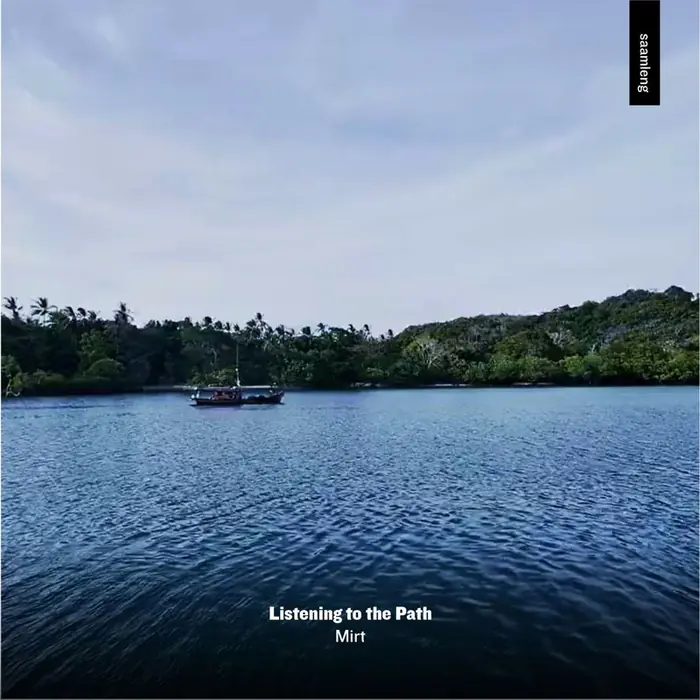
saamlengV01
Listening to the Path
Mirt
This movie is an addition to the work I’ve done over the last decade, exploring the soundscape of Tarutao Island. I have spent weeks wandering around, listening and recording sounds of this unique place. The result of these activities is five albums collected during the day and at night, in various locations on the island and submerged in the surrounding water. Most of the sounds in the video are taken from these five albums. It is not a typical documentary showing precisely the methodology and techniques I used. It focuses more on the elusive side of the whole process with significant emphasis on the listening itself and the meditative character of this activity. This approach applies to the entire process over all the years, not just the film itself. It influenced the choice of techniques, limiting the amount of equipment I used. In the film, I use a compact mid/side setup, although most of the material was recorded in A/B stereo. Some recordings were made with drop rigs left unattended for long hours. Capturing wide shots and a holistic approach was always my goal.
watch on youtube →
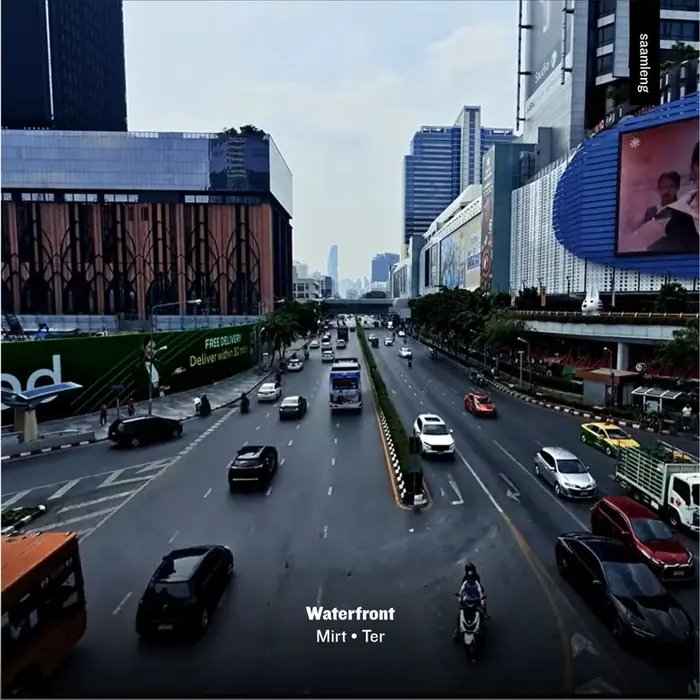
saamlengV02
Waterfront
Mirt • Ter
In January 2025, we spent several days recording the Chao Phraya River and Maha Nak canal in Bangkok. Many of the spots shown were well known to us: we enjoyed their atmosphere, had recorded them before and returned to them again. Others, we reached by accident while looking for access to the river through dense development. As a result of days of wandering and listening, the album “Waterfront” was created. We hope that the film serves as a good appendix to this album. Some sounds of streets and traffic are taken from the CD album “BKK”.
watch on youtube →